Solutions proposal for Tufts Operations & Campus Planning
The Winthrop Street Anchor: A Strategic Asset for the Tufts 2050 Master Plan.
A rebuilt mid-century institutional asset offering critical relief for the
Performing Arts, CoHo expansion, and Campus Decarbonization.
0.53 acCombined site: 0.33 ac + 0.20 ac
MBTAMedford/Tufts Green Line access
Property Information
Core property details for strategic review
Baseline facts for Tufts real estate, operations, facilities, and campus planning
leadership to test against long-range institutional needs.
Strategic frame
A Medford Hillside anchor already shaped for institutional use
100 Winthrop provides open-span gathering space, a high-capacity social hall,
classrooms, kitchen infrastructure, and administrative rooms. 101 Winthrop adds
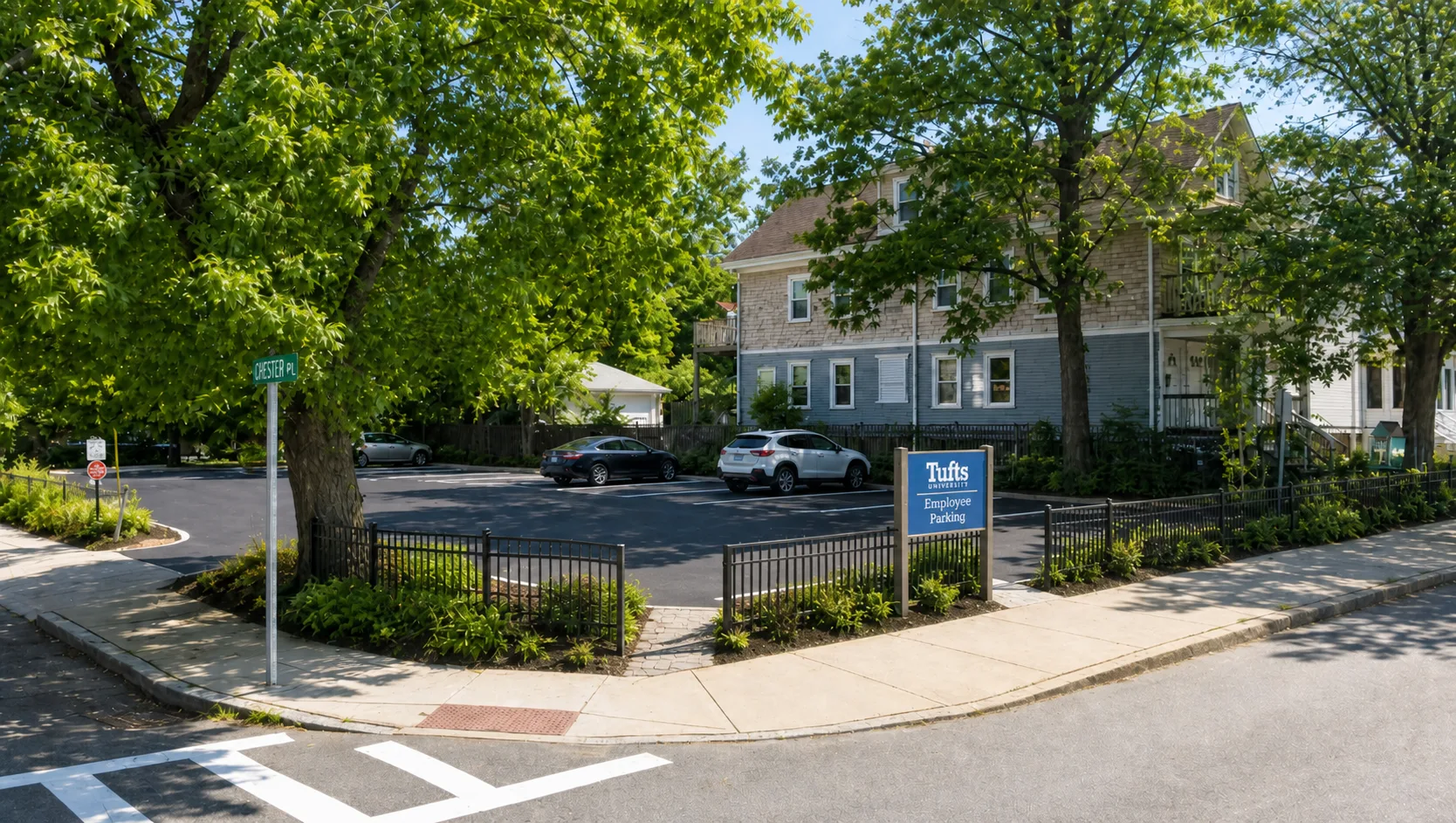
surface parking and a potential future utility-node parcel.
Existing building area14,874 sq ft
FY2026 assessor living area for the main institutional building at 100 Winthrop.
Campus adjacencyCoHo corridor
Winthrop Street position near existing Tufts investment, including 50 Winthrop.
Parcel control0.53 ac combined
100 Winthrop is the 0.33 acre main property; 101 Winthrop adds 0.20 acres of separately controlled parking and service-access flexibility.
Parking control20+ spaces
Approx. 20+ surface spaces, two driveways serving 100 Winthrop, and 9,000 sq ft of asphalt paving noted at 101 Winthrop.
Use profileInstitutional asset
Large open-span sanctuary, high-capacity social hall, and supporting rooms.
ZoningGR + SF2
100 Winthrop: GR. 101 Winthrop: SF2. Use-specific review should be completed before program reliance.
Construction historyRebuilt c. 1950
Reportedly rebuilt after a fire; church ownership dates to the late 1800s. Verify records during diligence.
All specifications, history, dates, dimensions, zoning references, parking counts,
condition statements, concept images, and use assumptions are preliminary diligence
inputs only. Reviewer is solely responsible for verifying all information with municipal
records, survey, zoning, legal, engineering, environmental, architectural,
accessibility, facilities, risk, insurance, and other appropriate advisors.
The church reportedly owned the property since the late 1800s, with the current
structure rebuilt circa 1950 after a fire. Its assembly volume, social hall,
support rooms, and surface parking make it more comparable to a small
campus-support facility than a standard residential acquisition. Reviewers should
verify ownership history, fire history, construction history, permits, records,
and legal use during diligence.
Location Context
A Medford Hillside anchor for Construction for Good
The site gives Tufts a growth opportunity that can benefit both the institution
and the Medford community: more controlled campus-adjacent capacity, less pressure
on scattered off-campus housing, and a walkable transit-oriented location.
100 + 101 Winthrop StClose to Tufts, Medford/Tufts Green Line, I-93, Cambridge, and Boston.
Primary site100 & 101 Winthrop St
Adjacent building and parking parcels in Medford Hillside: approx. 0.53 acres combined, with 0.33 acres at 100 Winthrop plus 0.20 acres at 101 Winthrop.
Education anchorTufts University
Campus-edge location for upperclassmen housing relief, student support, education, and community-facing programs.
Transit accessMedford/Tufts Green Line
Approximately 0.4 miles from the site, supporting car-light staff, students, visitors, and program users.
Regional reachI-93, Cambridge, Boston
Regional access supports staff, events, service operations, and community partnership logistics.
Strategic Anchor
Why 100 Winthrop belongs in the Tufts 2050 conversation
This is not simply a building purchase. It is a compact platform for three
institutional needs that are difficult to solve inside the campus core: housing
pressure, performing arts rehearsal space, and decarbonization infrastructure.
Transit
Transit-oriented campus growth
Medford/Tufts Green Line access supports car-light staff, student, visitor, and event movement.
Housing
Pressure relief near CoHo
Controlled institutional common space can reduce reliance on scattered off-campus housing and support a stronger Winthrop Street student-life corridor.
Arts
Performing arts third space
The sanctuary and social hall can absorb rehearsals, recitals, and student-group use that does not need to compete for Granoff Music Center time.
Energy
Parking lot utility node
The 101 Winthrop surface lot can serve as a building-specific utility yard for 100 Winthrop, with vertical closed-loop geothermal wells below the parking surface and a short utility loop under Winthrop Street.
Strategic takeaway: 100 and 101 Winthrop can be evaluated as a
single hillside anchor: program space today, housing and student-life support near
CoHo, and potential infrastructure flexibility for the 2050 carbon-neutral campus.
Winthrop Street Corridor
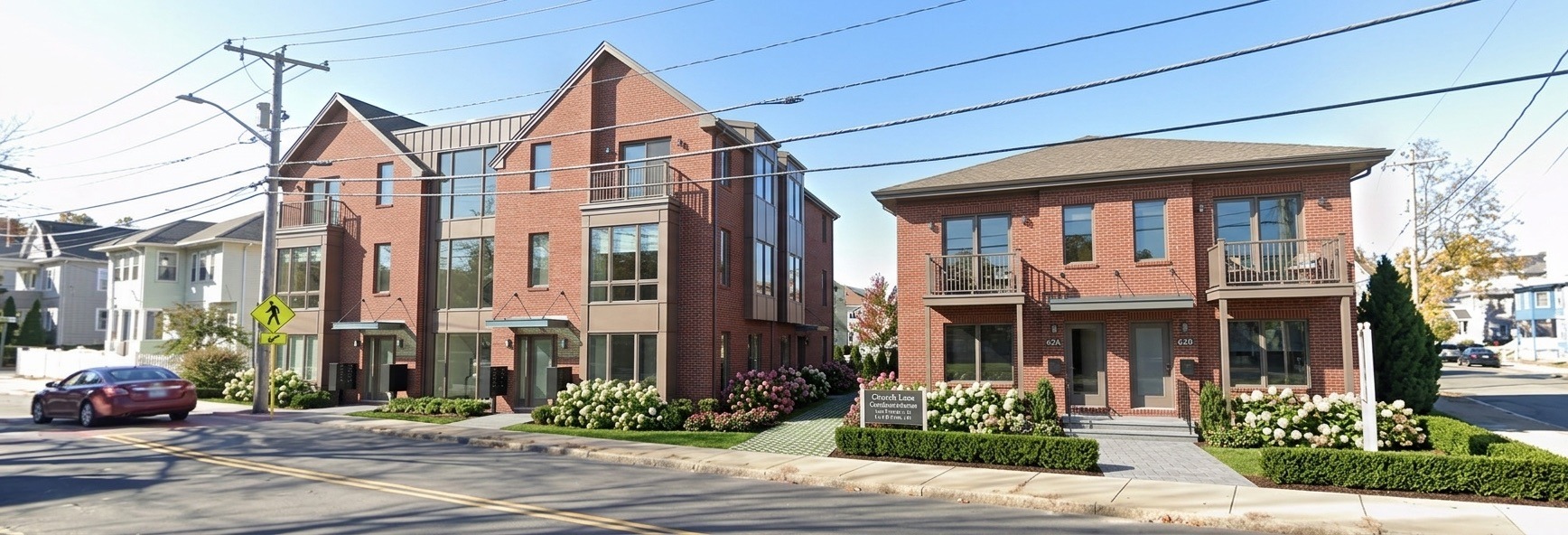
Completing the Winthrop Street CoHo corridor
Tufts is already heavily invested on Winthrop Street. 100 Winthrop can supply
the institutional-scale common space that individual wood-frame CoHo houses lack:
study lounges, seminar rooms, theme-house headquarters, rehearsal rooms, or shared
student-life support.
100 Winthrop St
Institutional common-space anchor
Large open-span sanctuary suitable for rehearsal, recital, lecture, or gathering use.
High-capacity social hall for study, meetings, student support, and theme-house programming.
Approx. 0.33 acre main parcel with two driveways serving access and circulation.
101 Winthrop St
Parking lot utility node
Separate 0.20 acre parcel currently used for surface parking.
Credible near-term site for vertical closed-loop geothermal wells serving 100 Winthrop directly.
Boreholes have a minimal permanent surface footprint; after drilling, the lot can be repaved and parking restored.
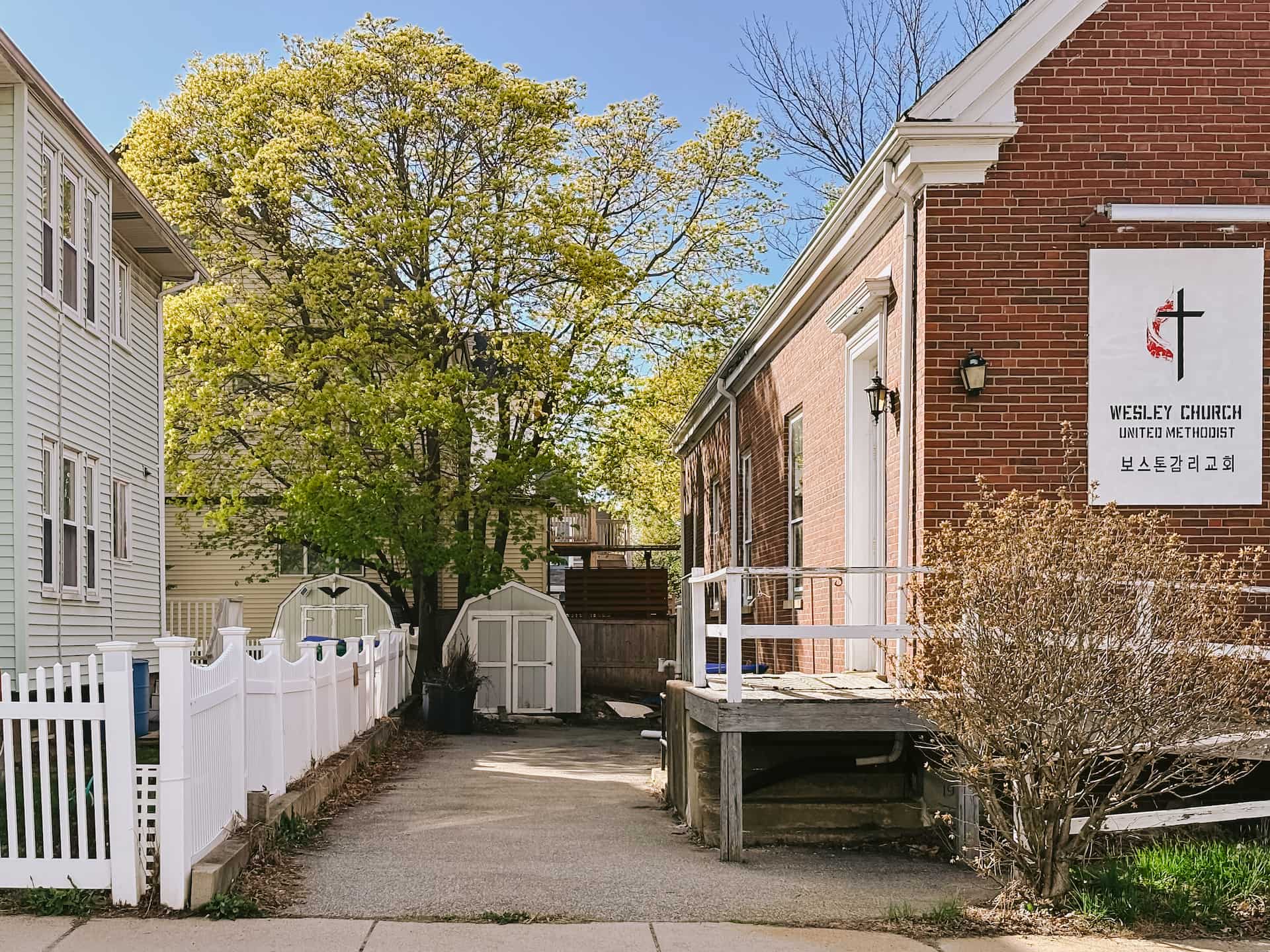
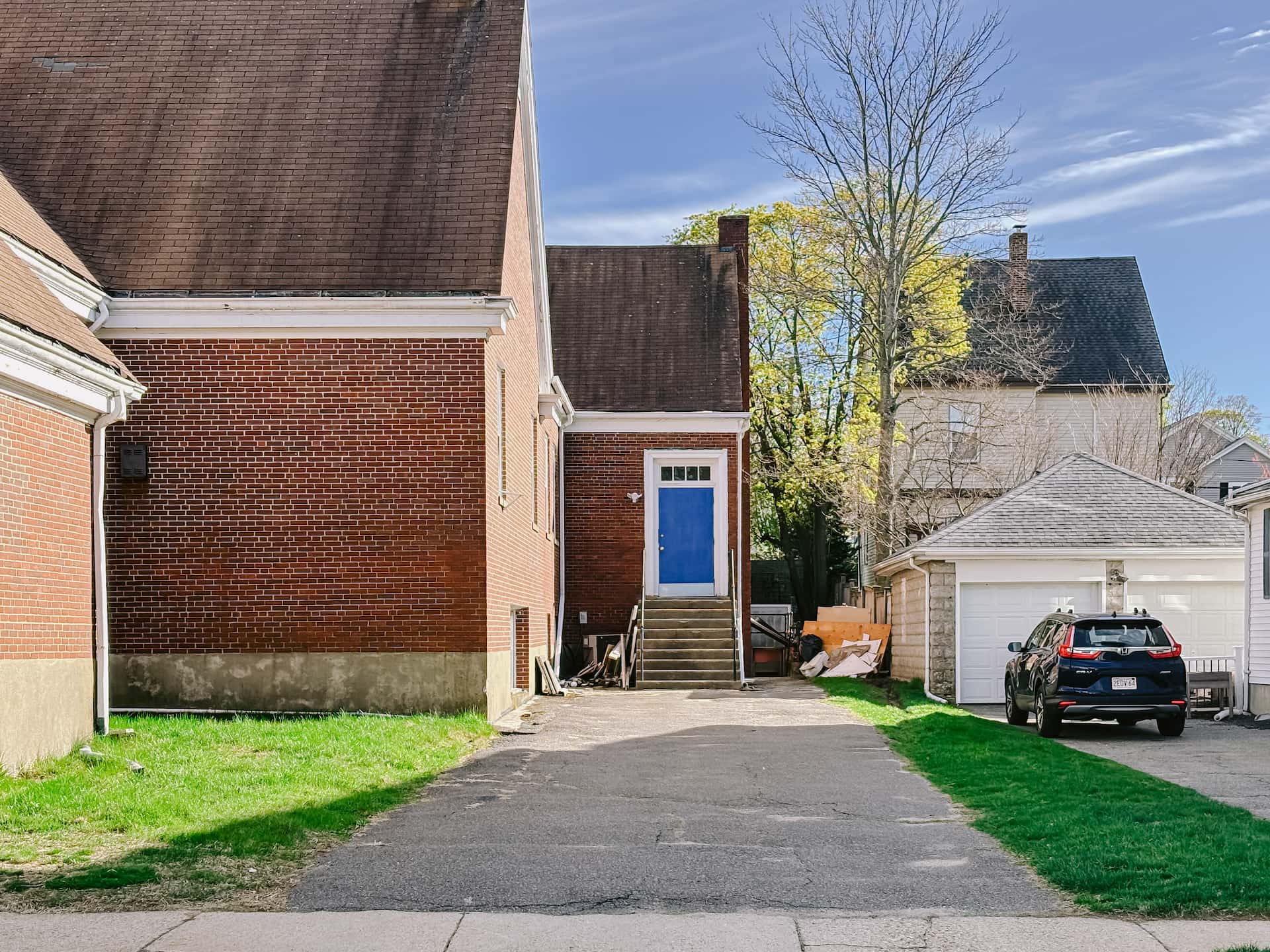
Side entry and exterior accessDriveway and rear access
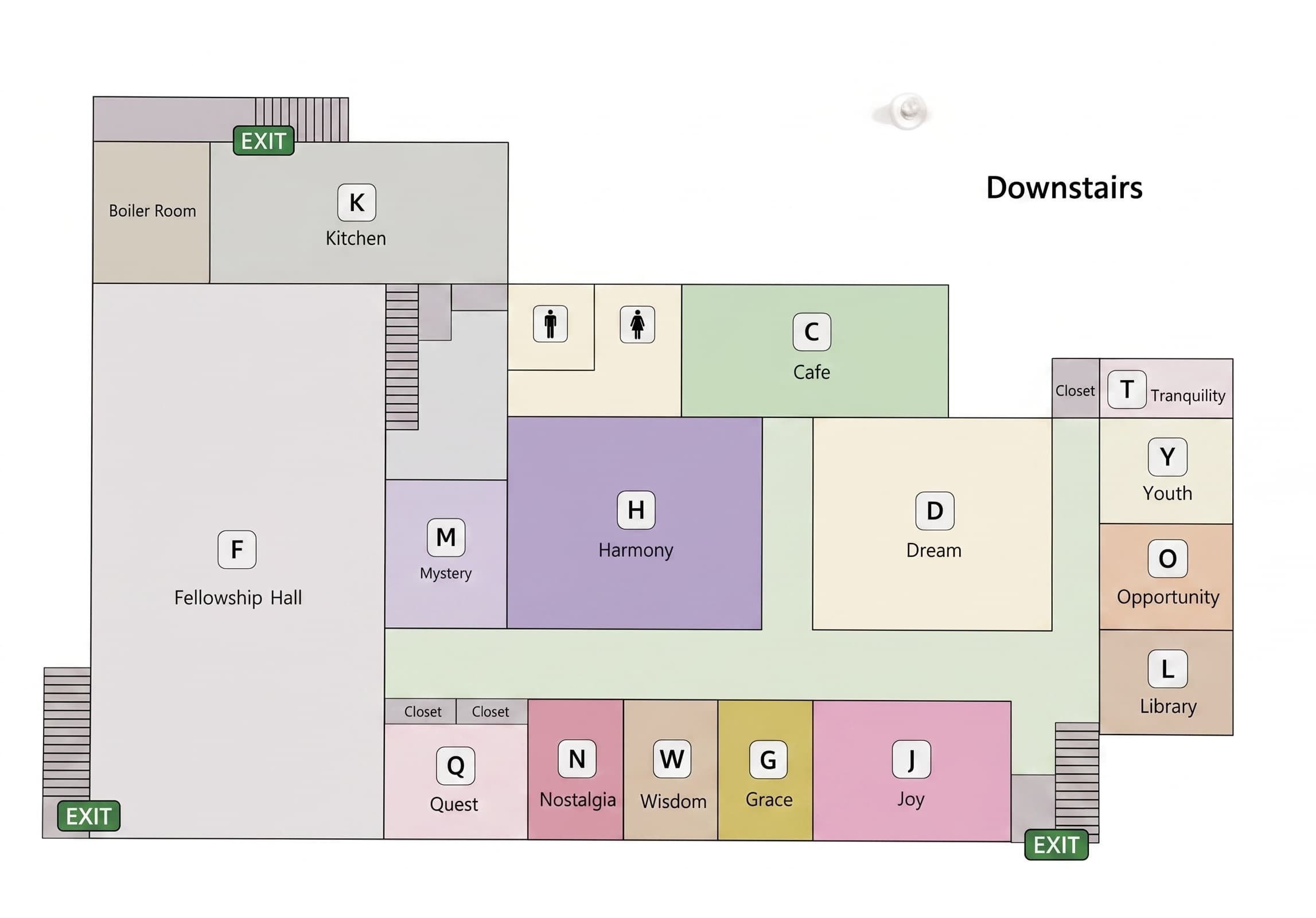
Floor Plans
Existing institutional room program
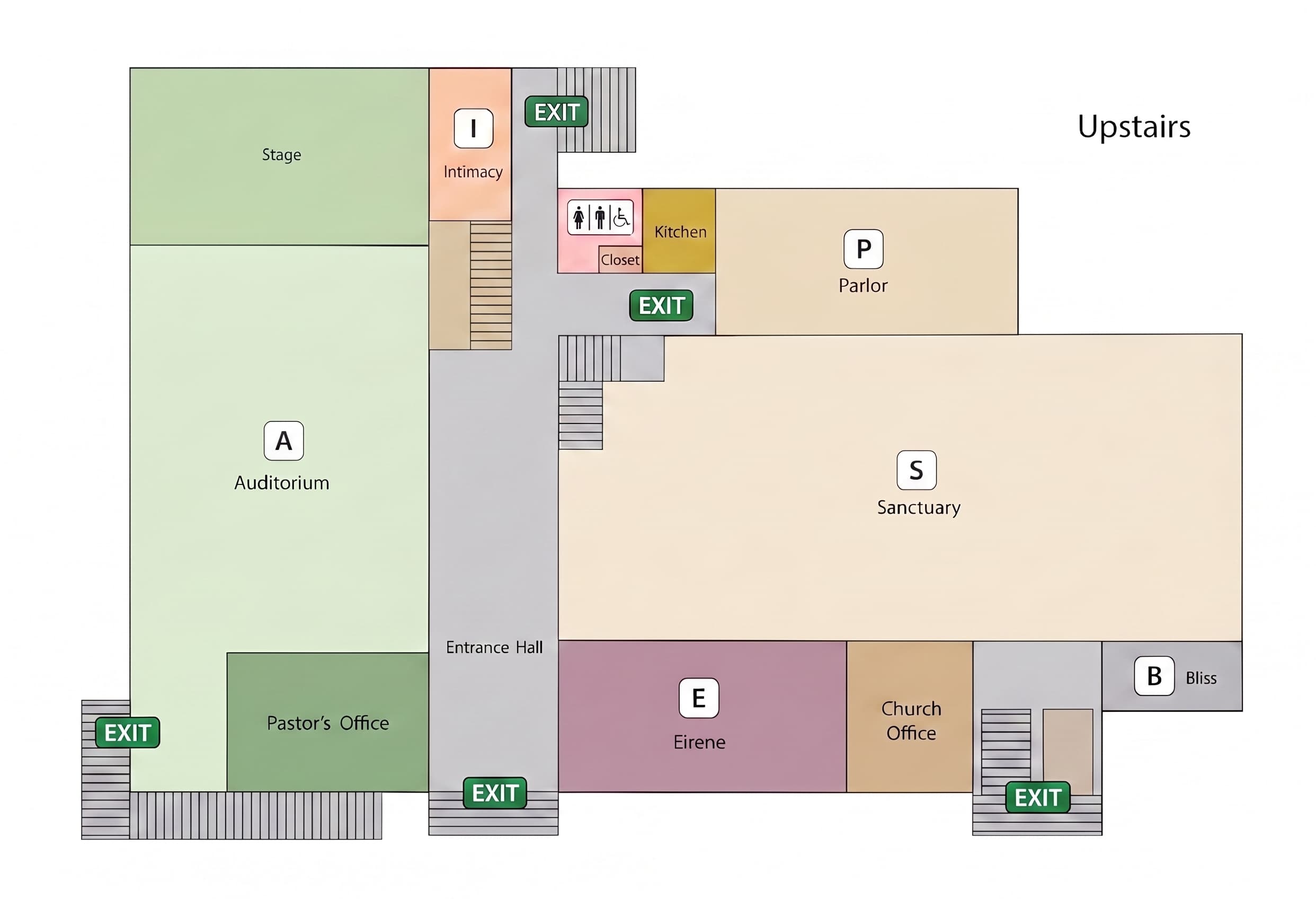
The building includes large gathering spaces on both levels, support rooms,
kitchens, restrooms, and several exterior exits. The plans are useful for early
test-fits around rehearsal, common-space, housing support, and Operations Division
service needs.
Upstairs floor plan - main assembly hall, auditorium, meeting rooms, offices, kitchen, and exitsDownstairs floor plan - community hall, cafe, kitchen, classrooms, library, and exits
Reuse Concept Photos
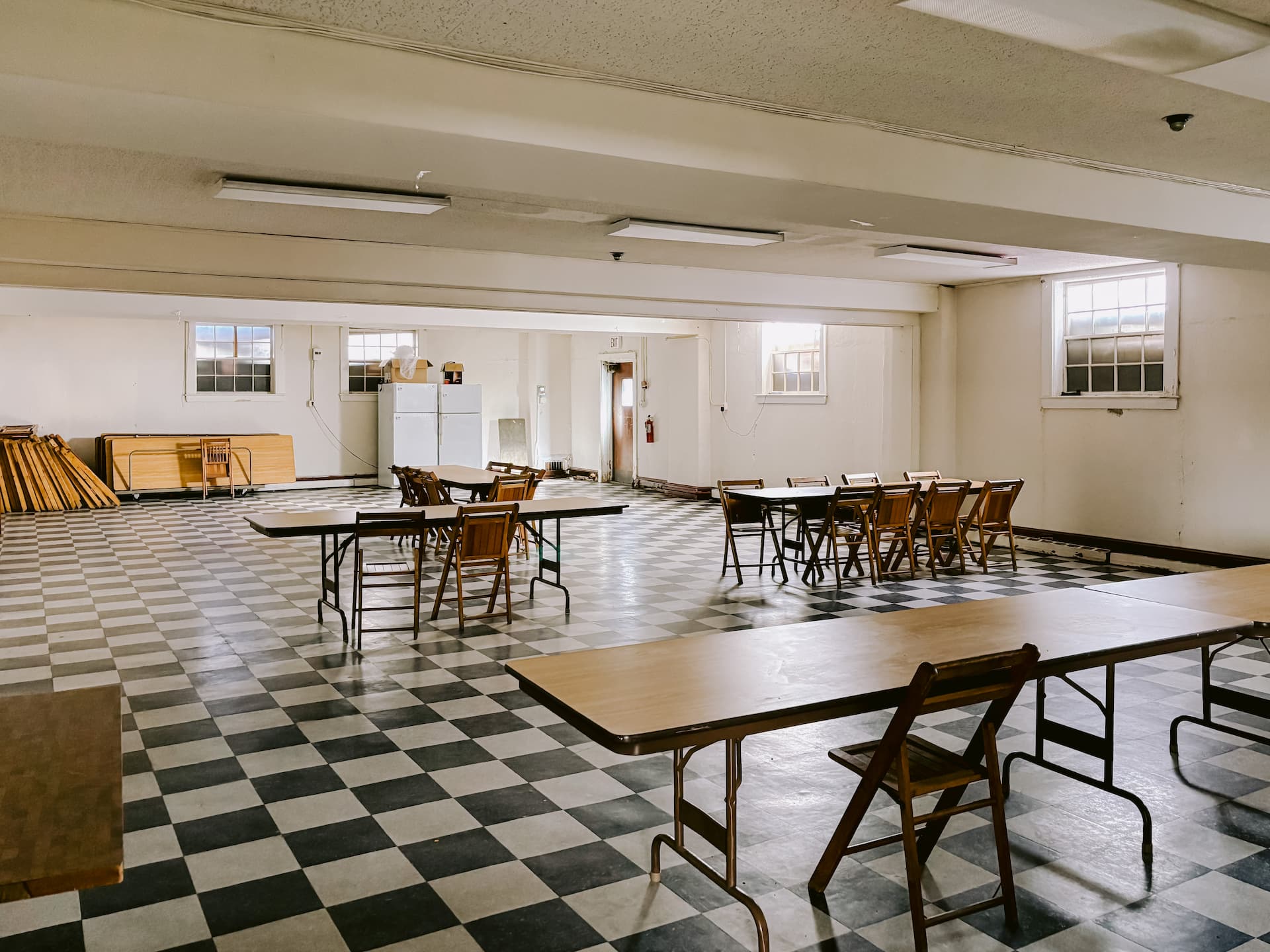
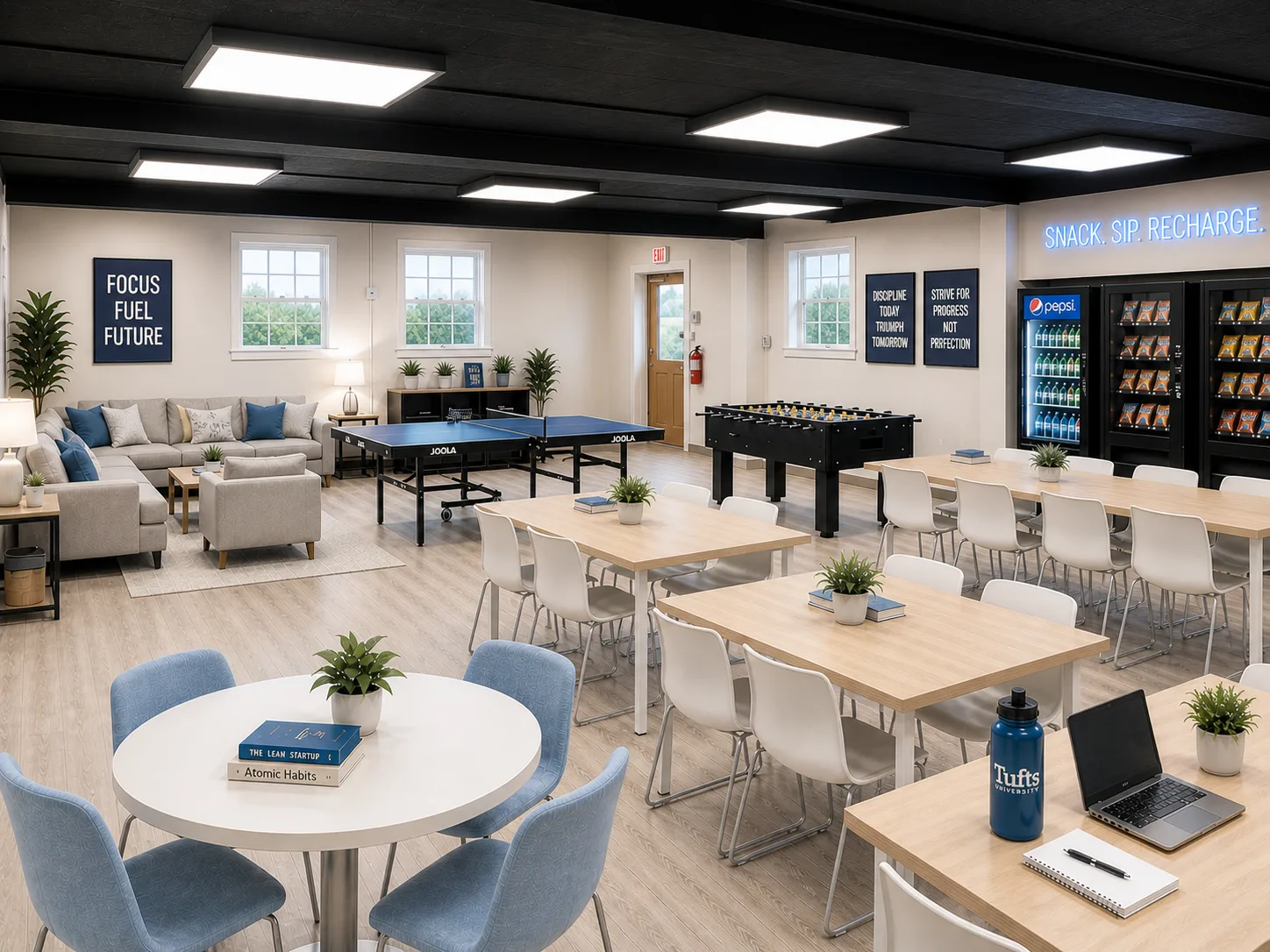
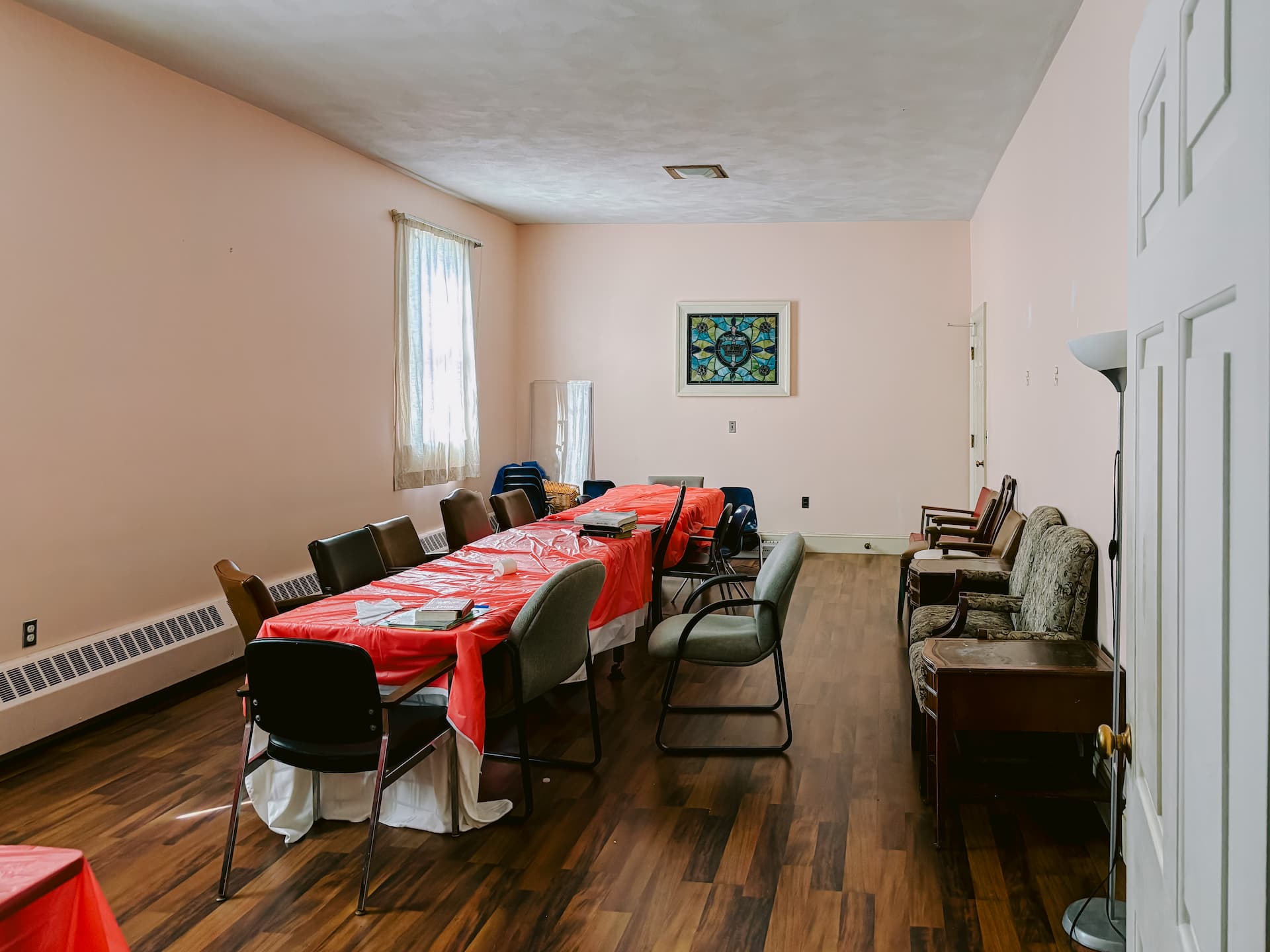
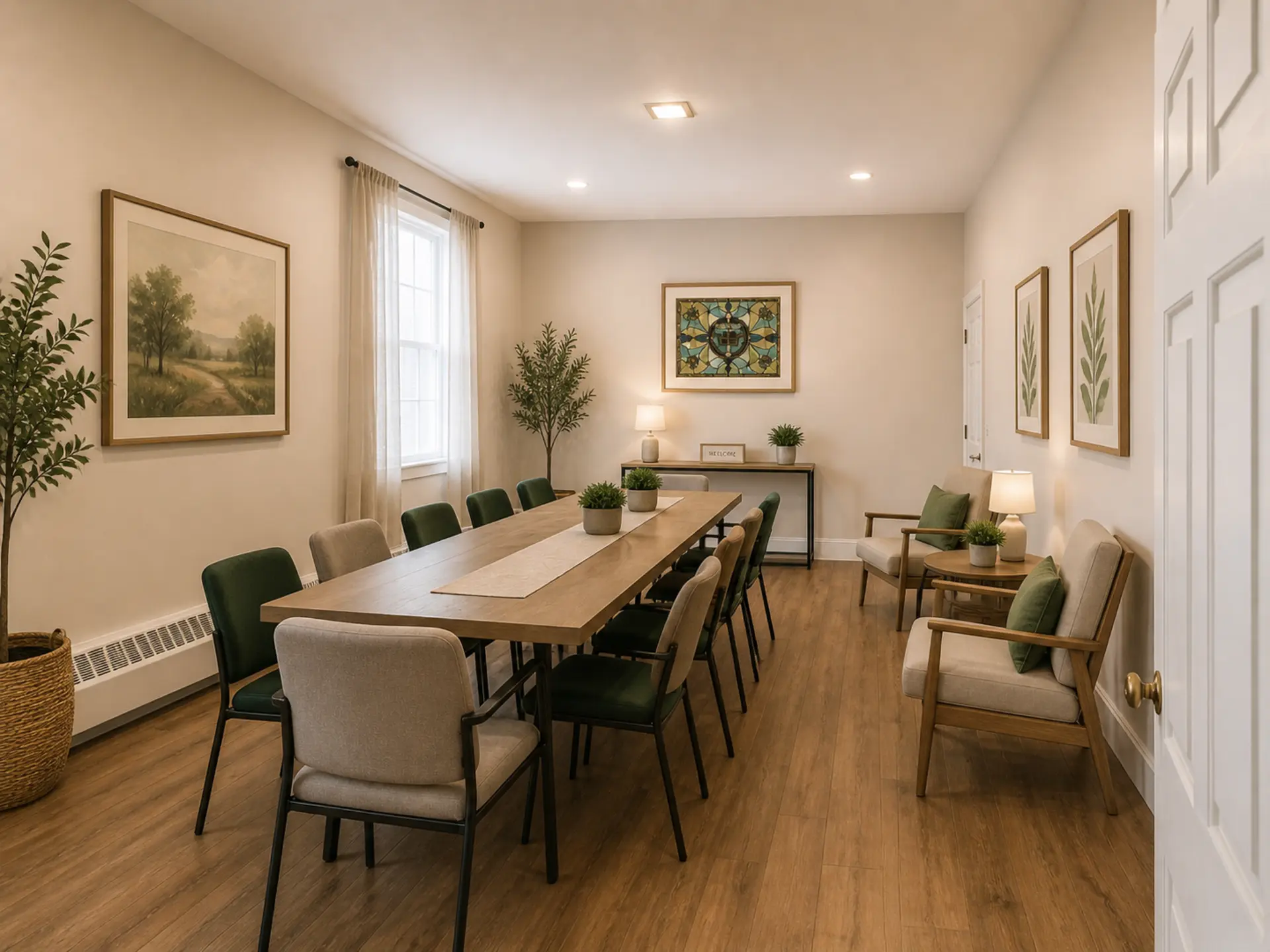
Before / after concept views
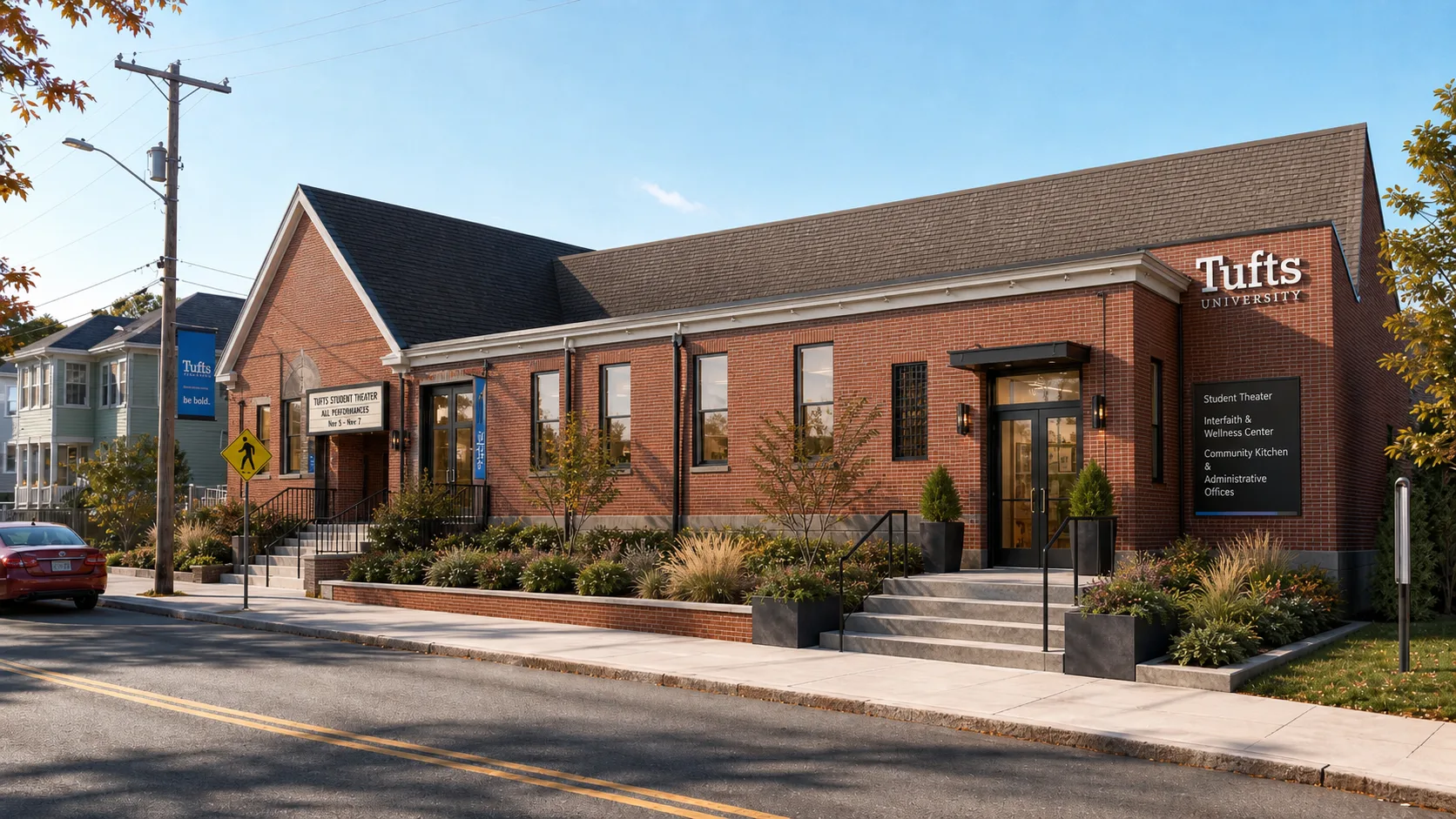
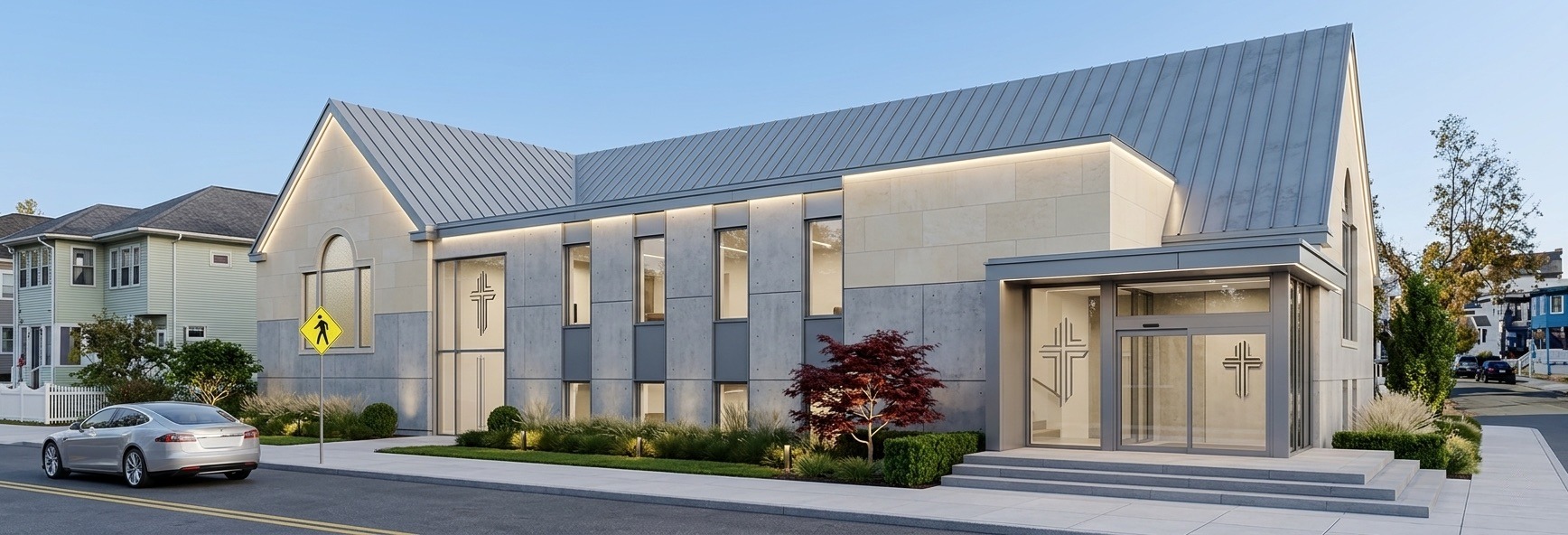
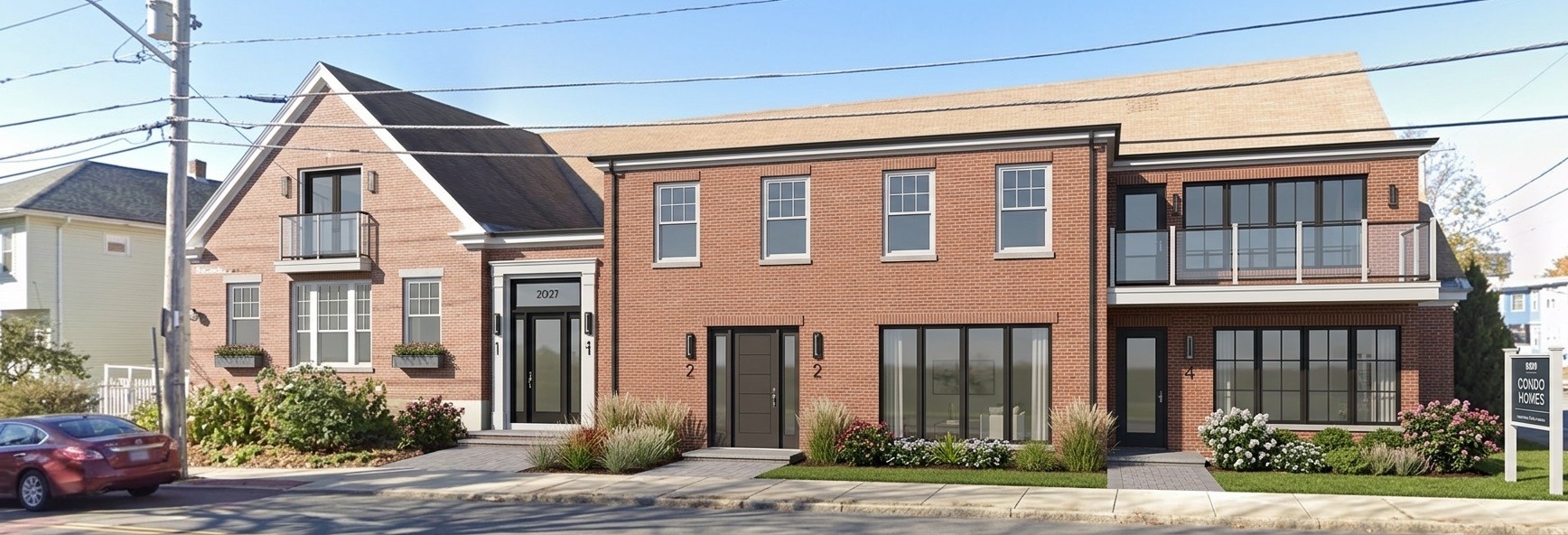
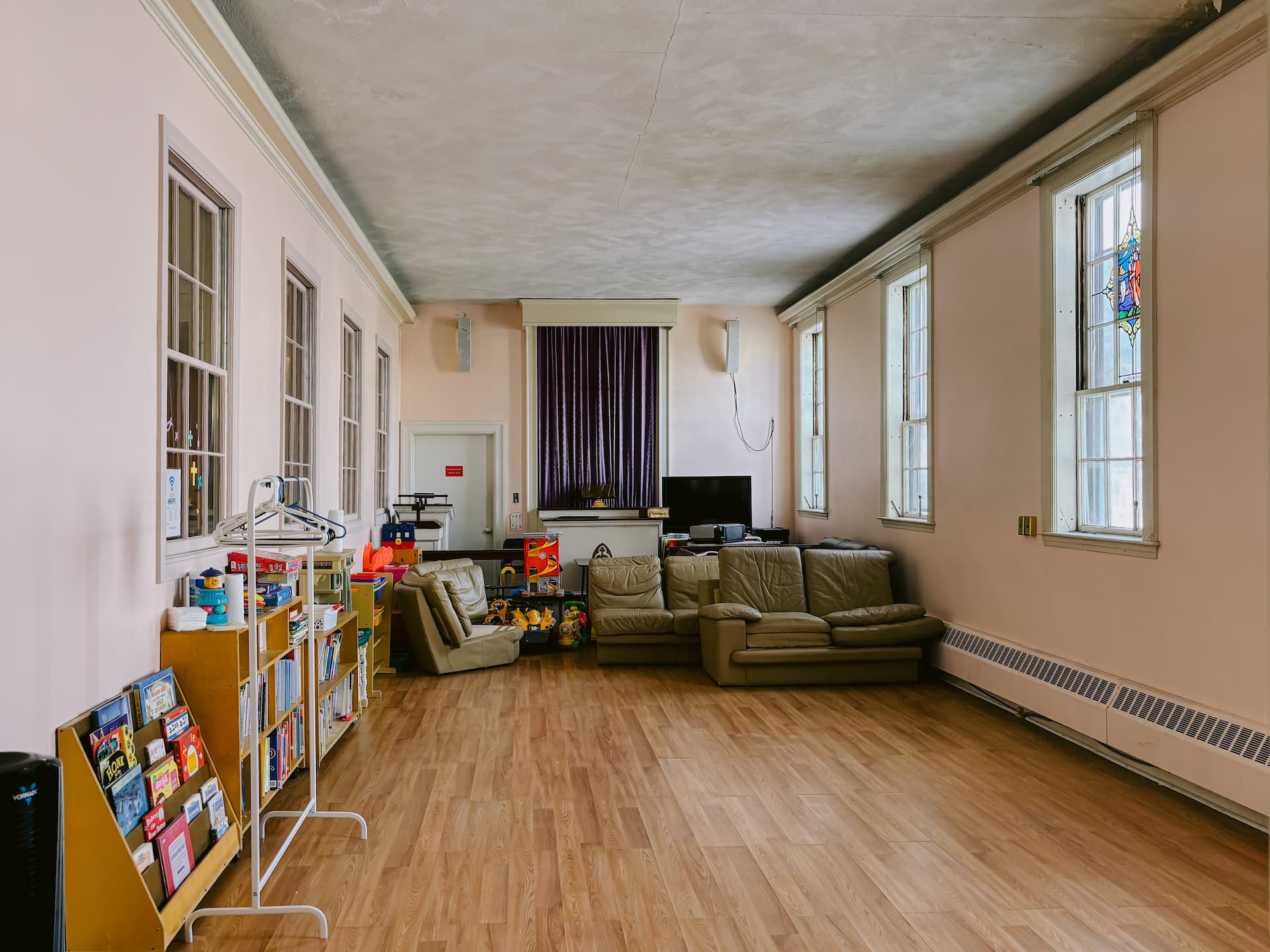
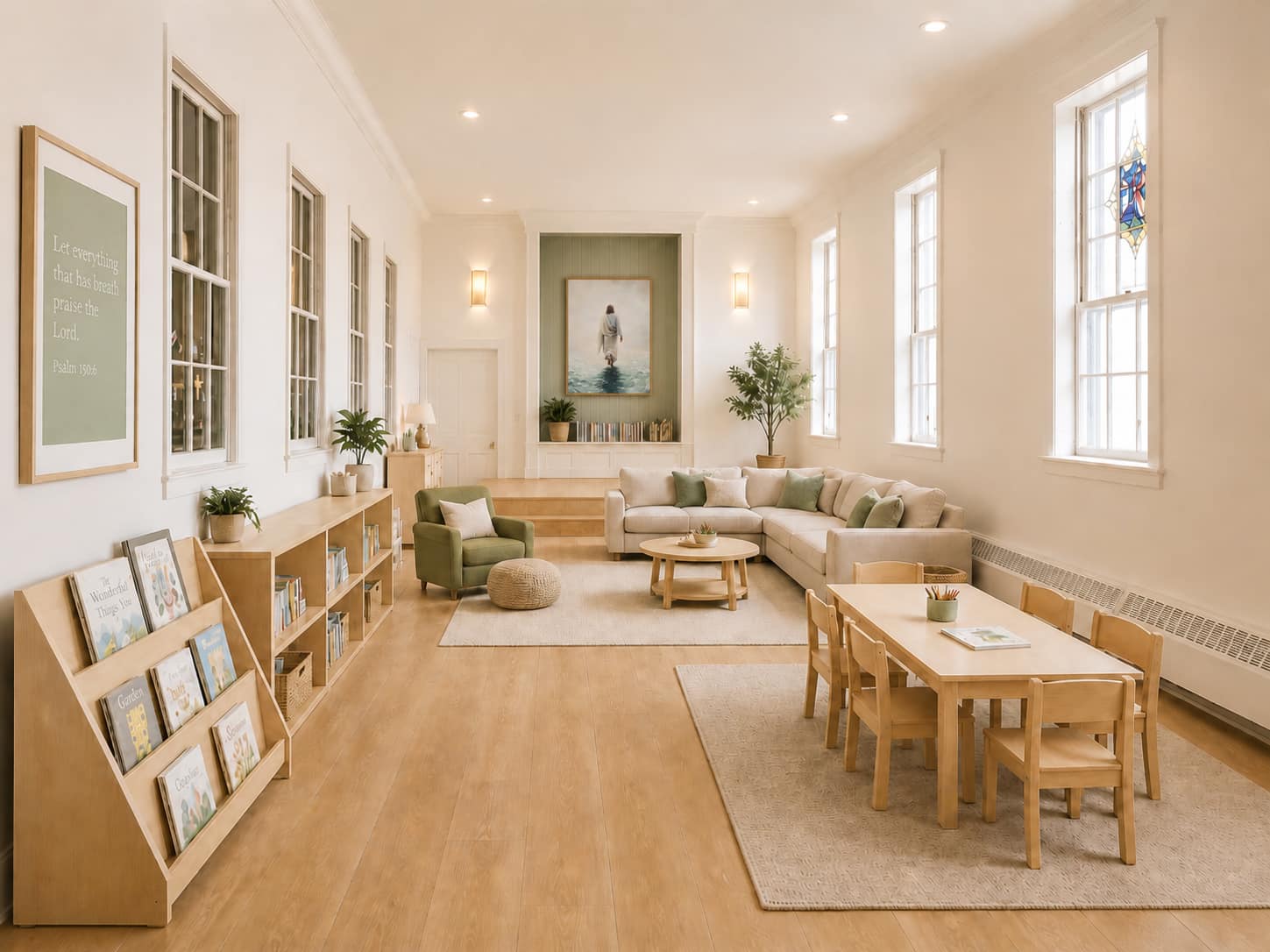
These paired images use current room photos and virtual staging to show potential
campus-support scenarios for arts, student-life, food access, offices, and housing
relief. They are concept visuals only and should be evaluated separately from
physical condition, code, cost, and approval diligence.
Virtually Staged Before / After Potential
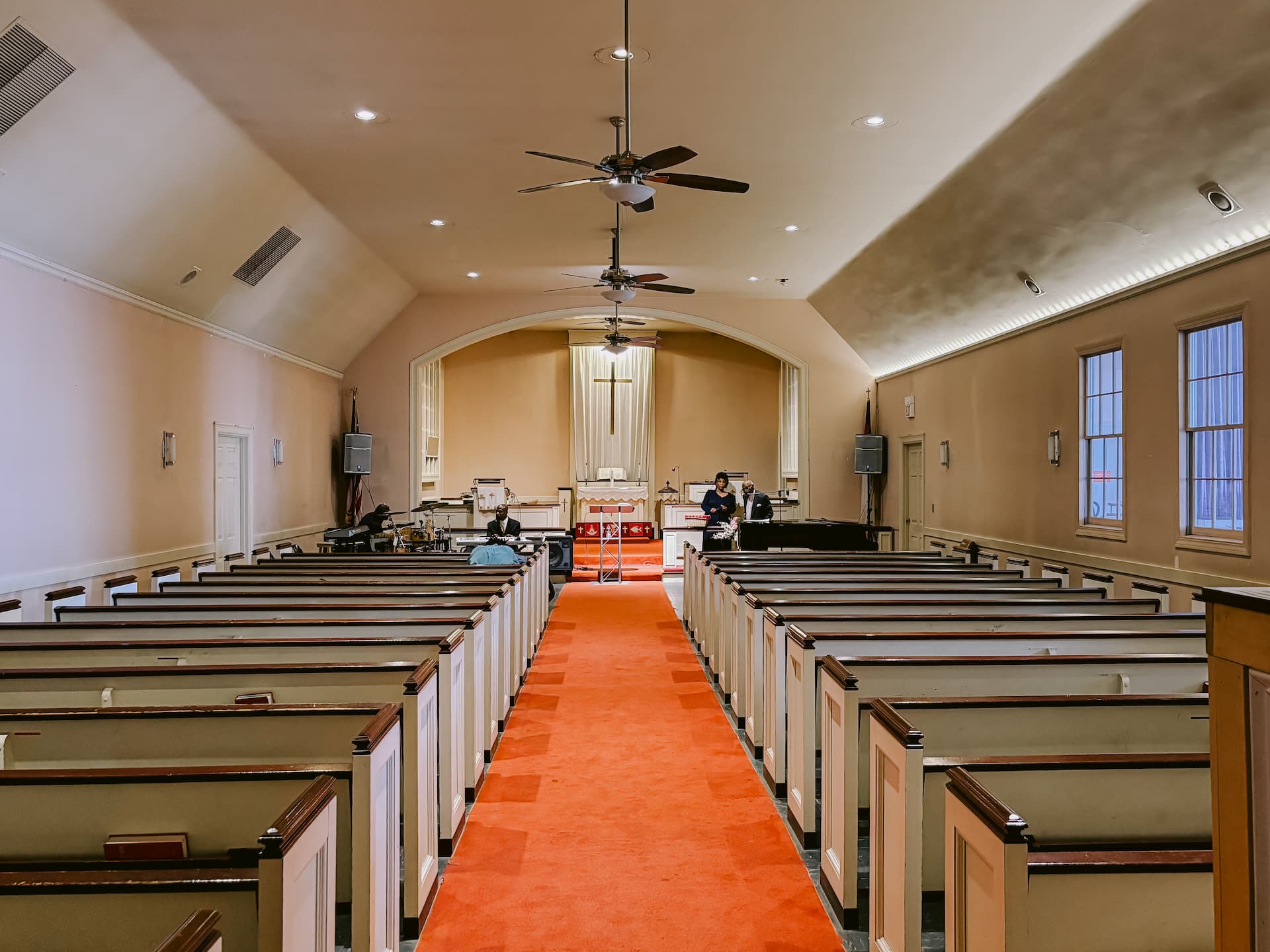
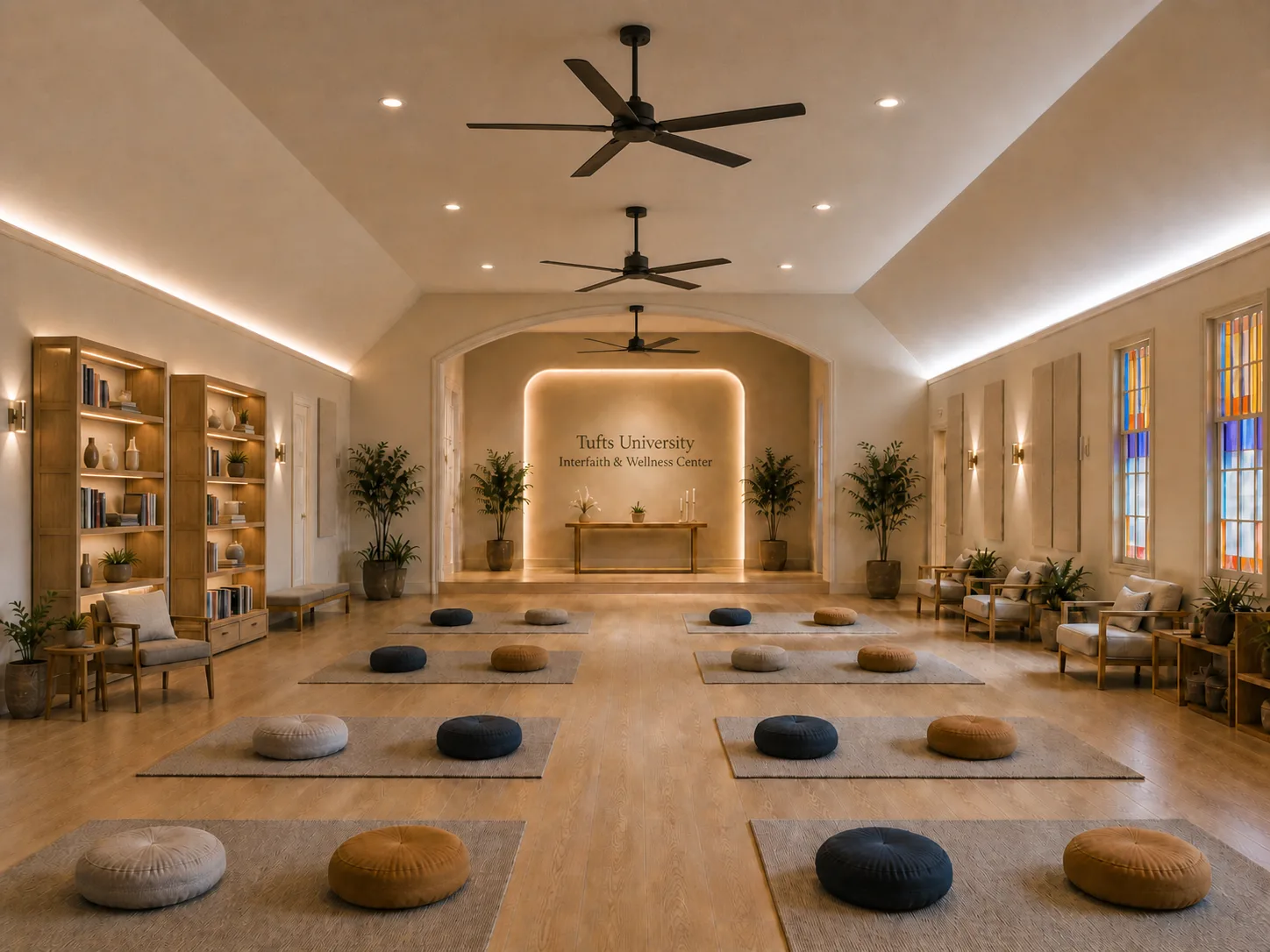
CurrentPotential
Interfaith and wellness center concept
Shows how the existing main assembly hall volume could be studied for quiet interfaith, wellness, reflection, and small gathering use.
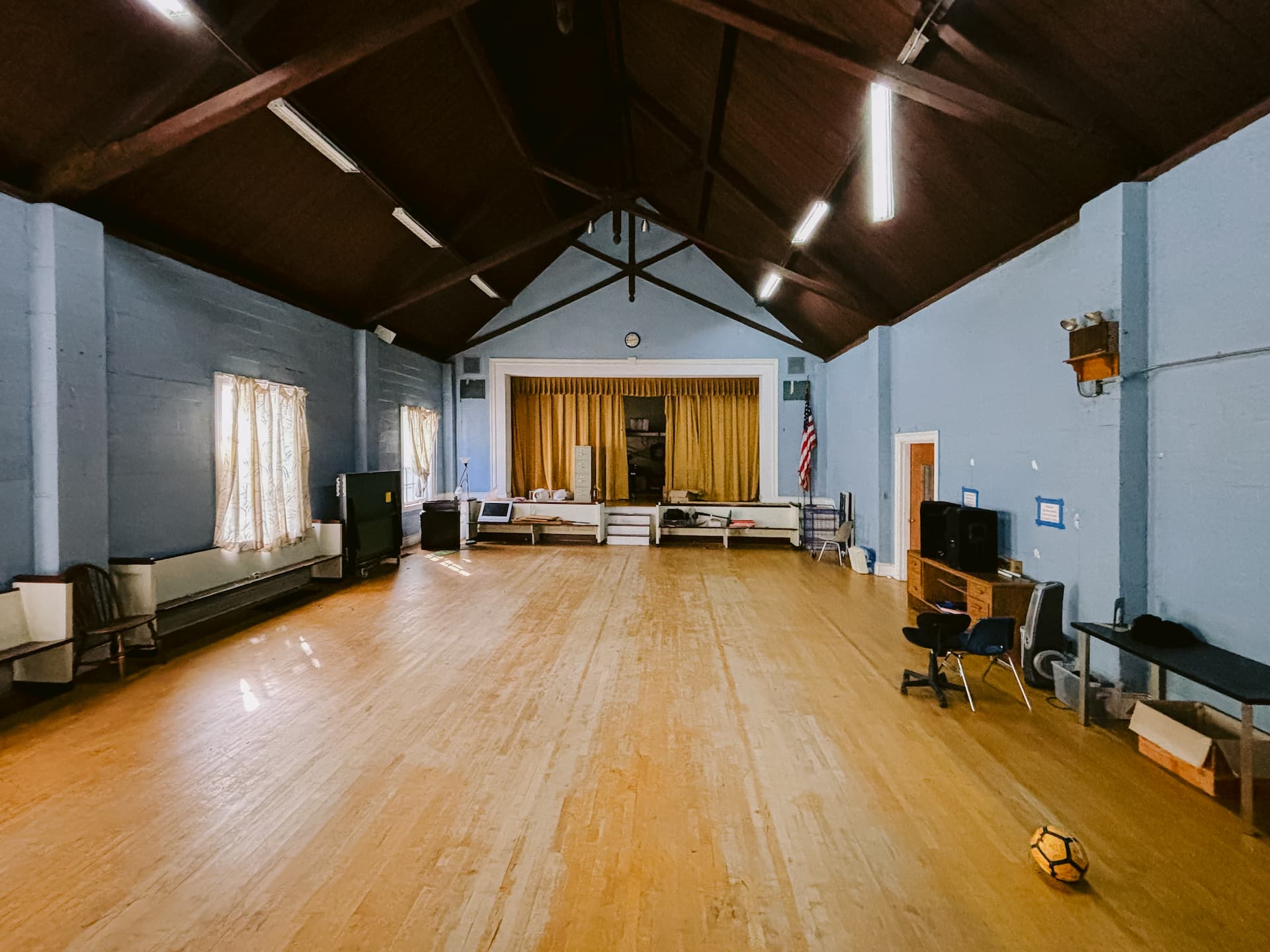
CurrentPotential
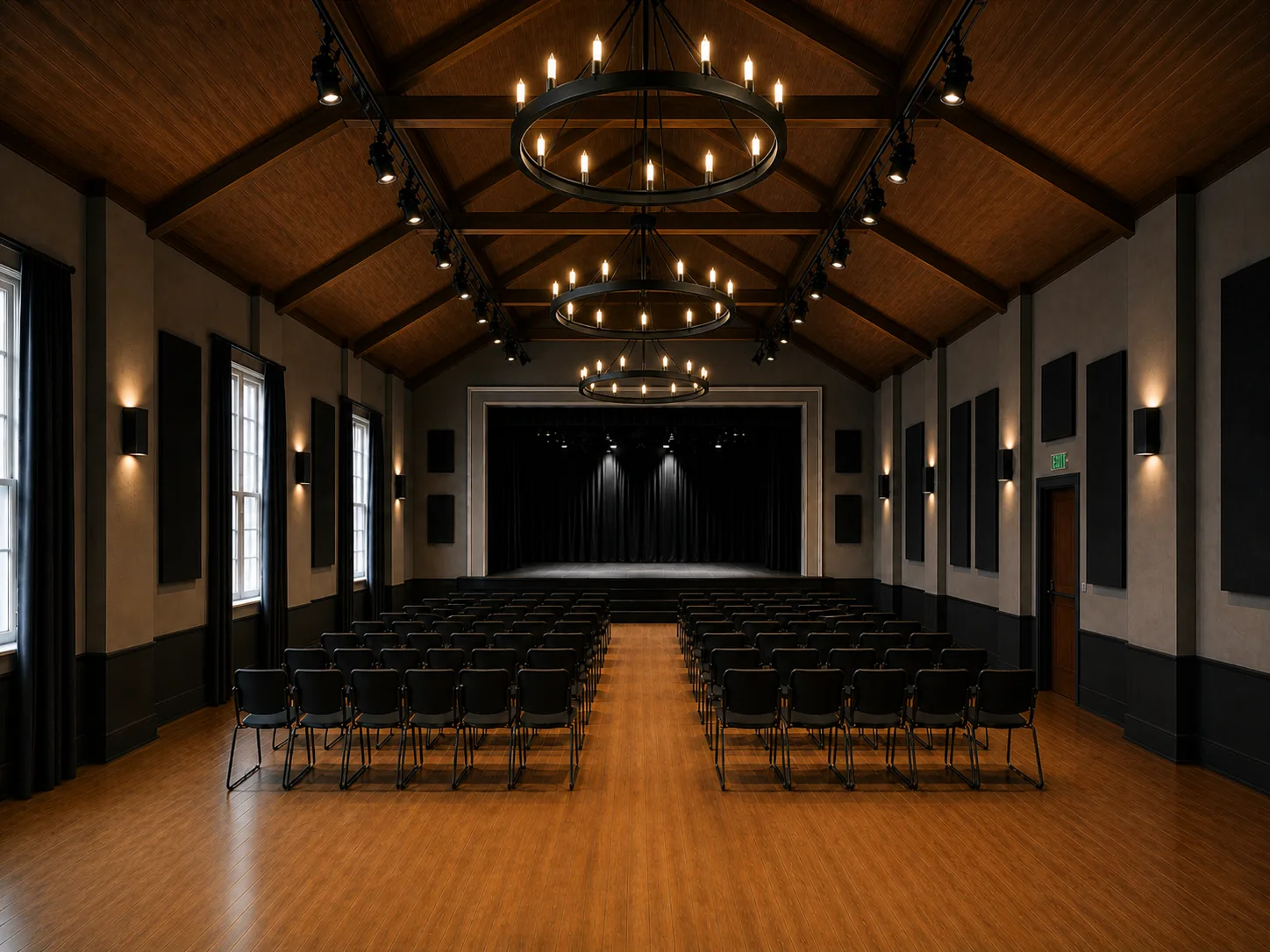
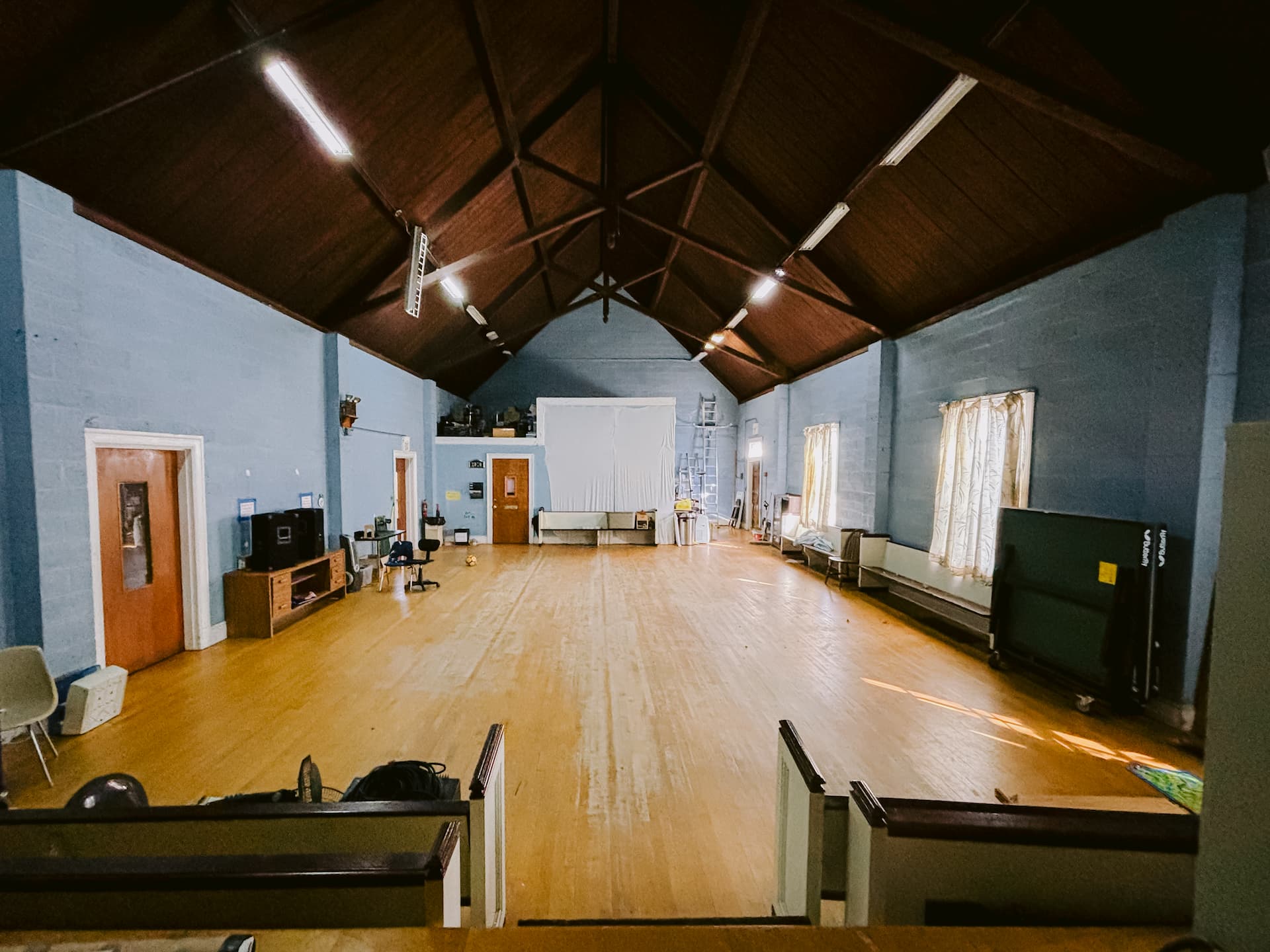
Performance / event / function hall concept
Shows how the hall could be studied as a flexible university venue for lectures, ceremonies, performances, rehearsals, meetings, and function-space use.
CurrentPotential
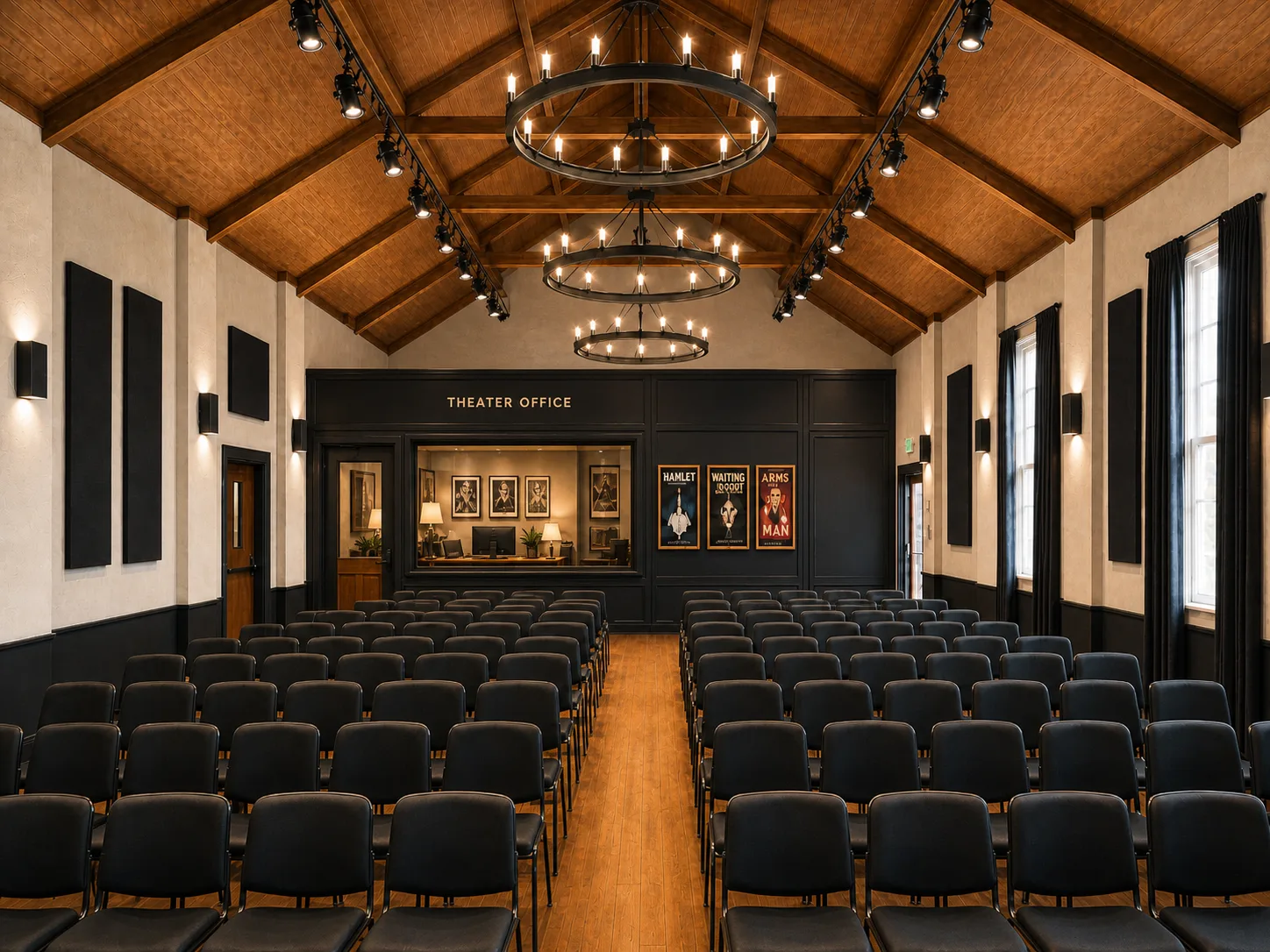
Lecture / event seating concept
Shows a seated event layout that could support university lectures, performances, ceremonies, community gatherings, and formal functions.
CurrentPotential
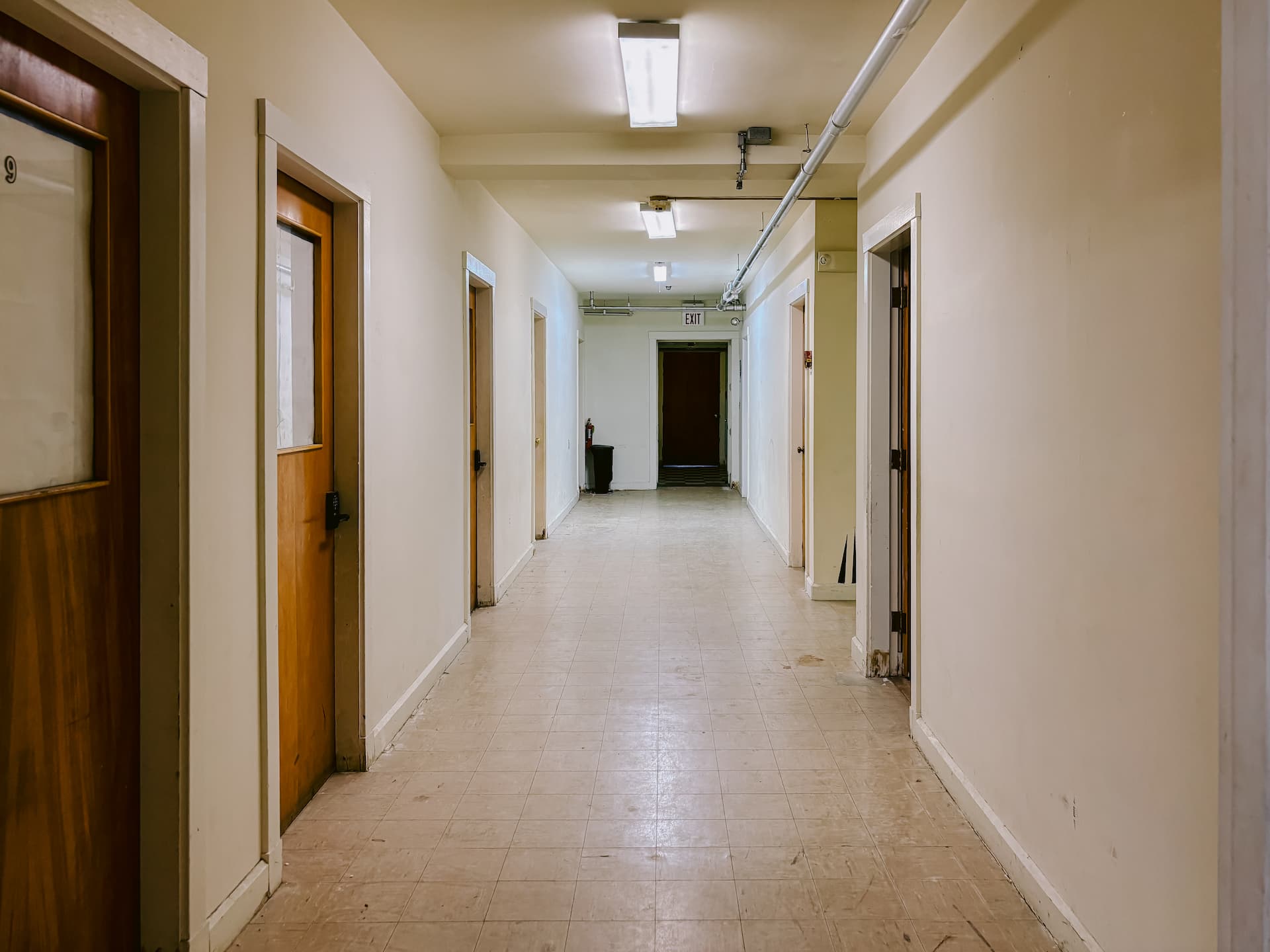
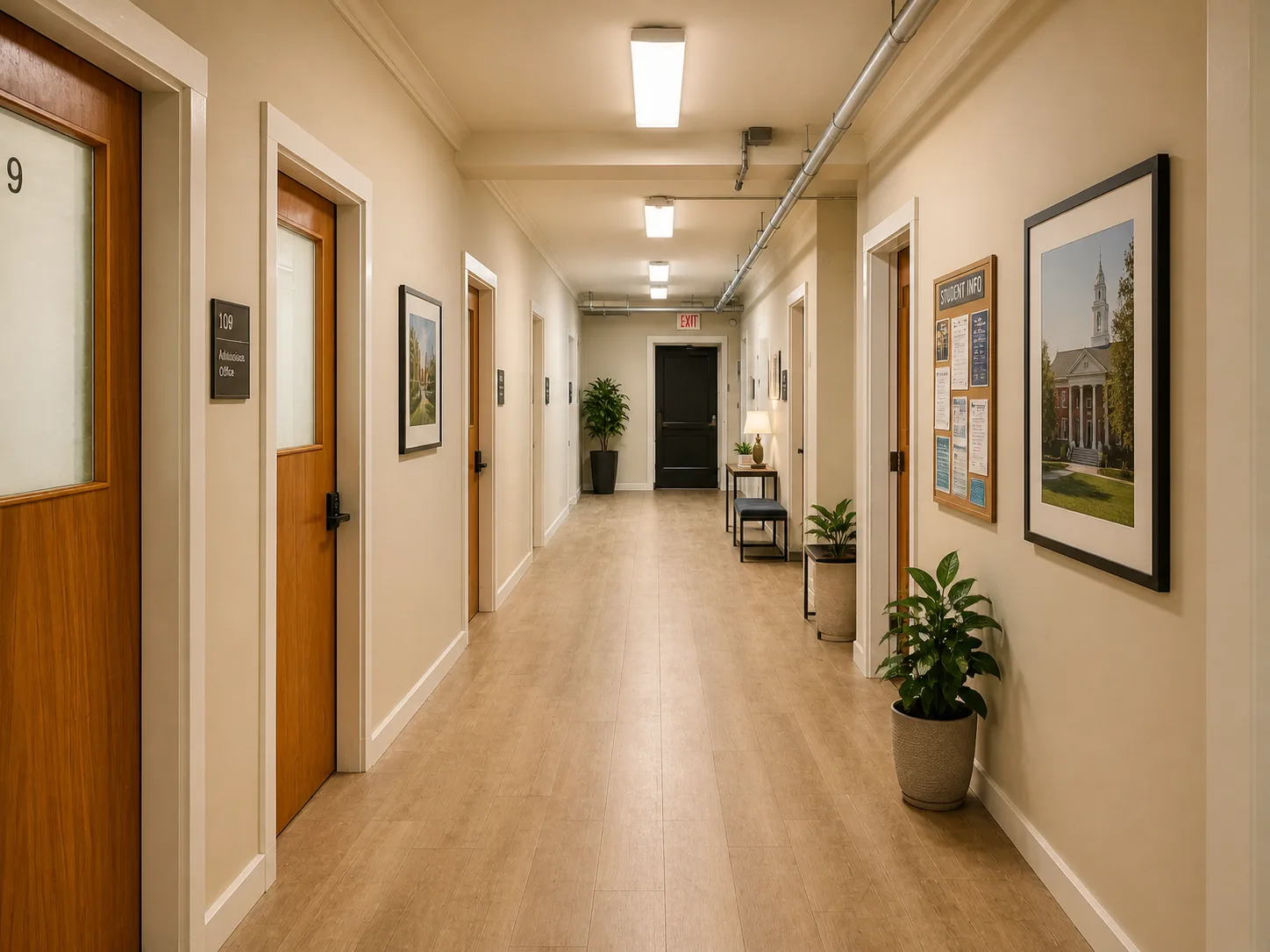
Office corridor concept
Shows a more finished corridor condition for admin, faculty overflow, counseling, or student-service offices.
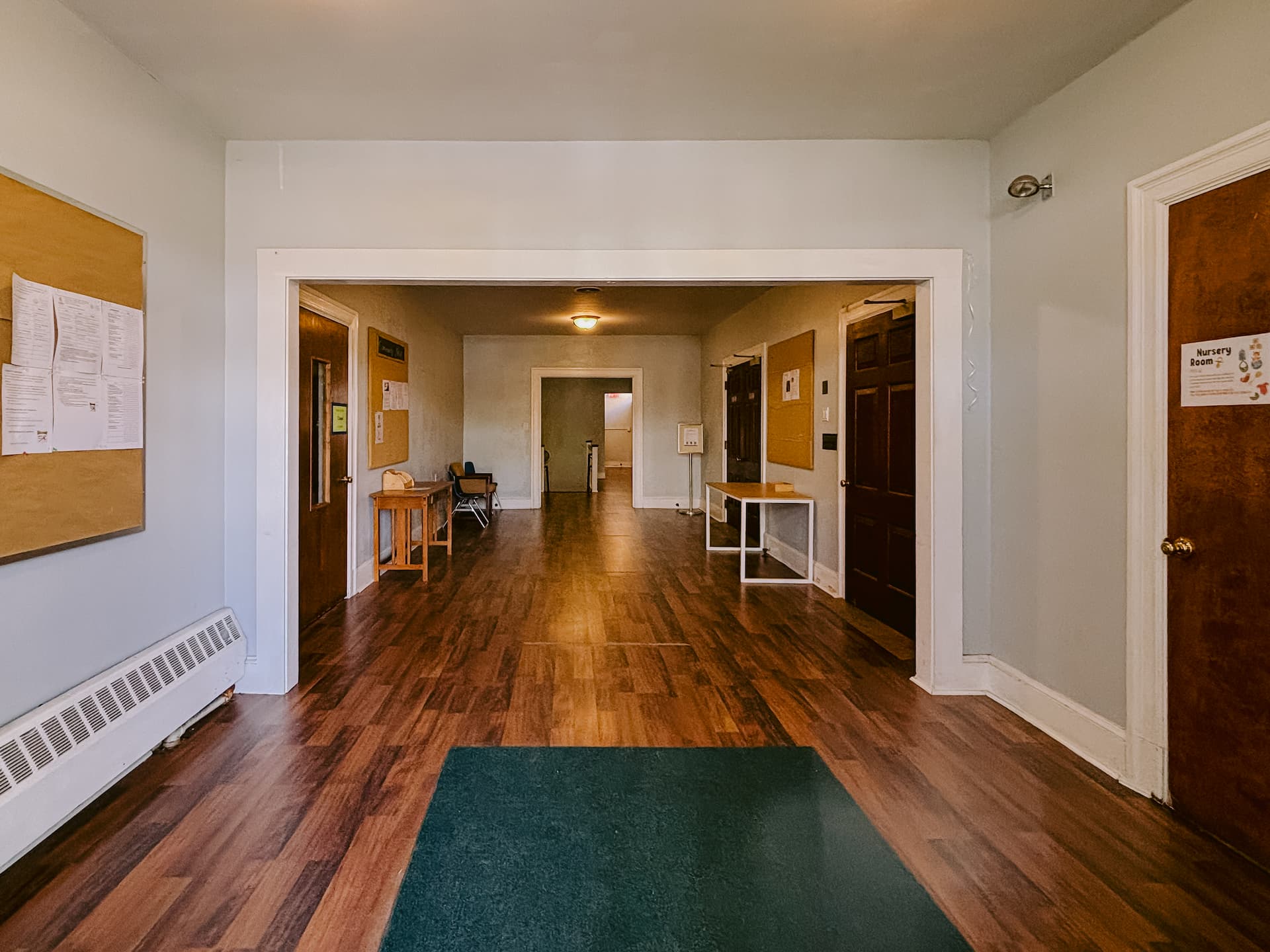
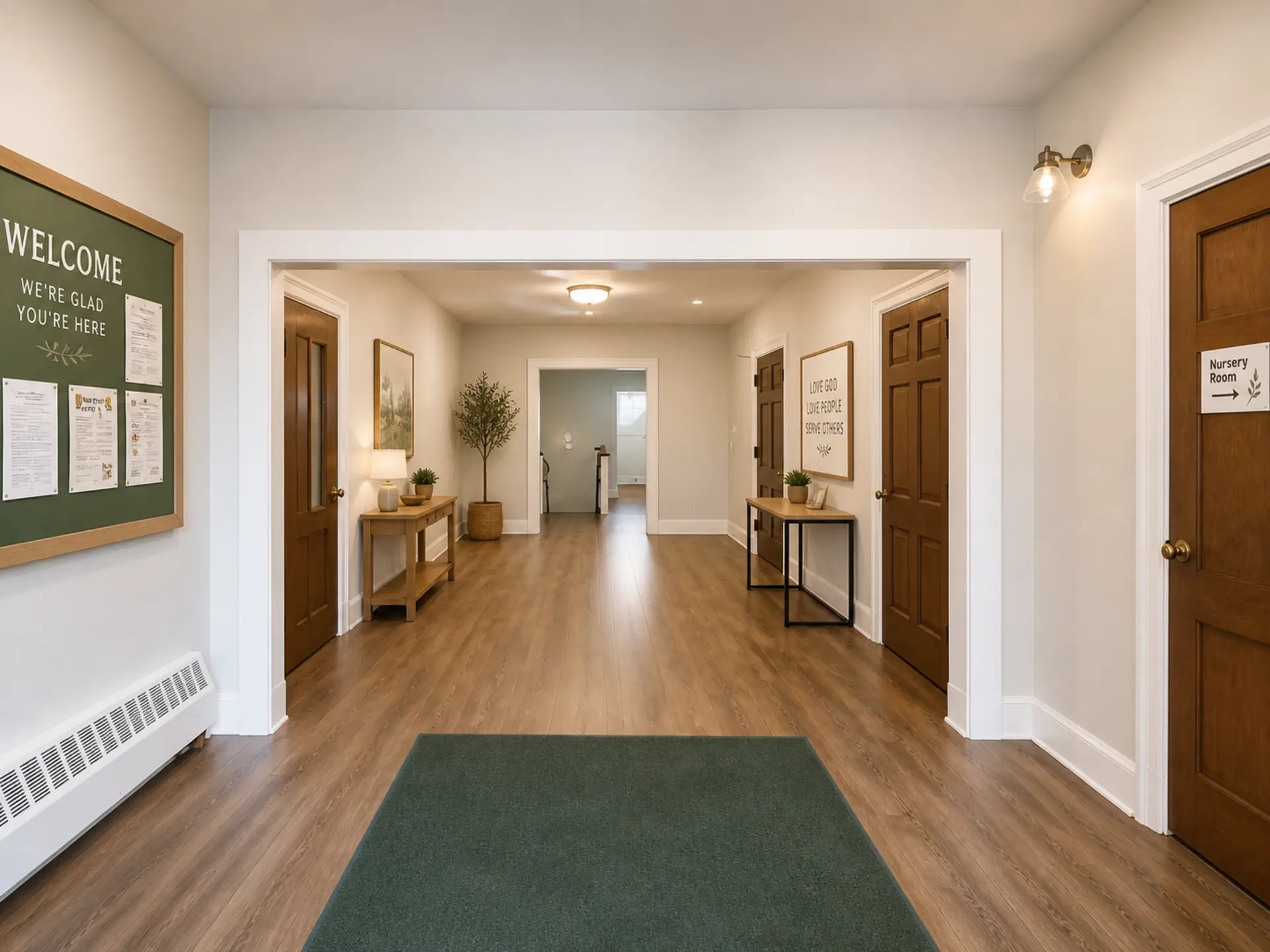
CurrentPotential
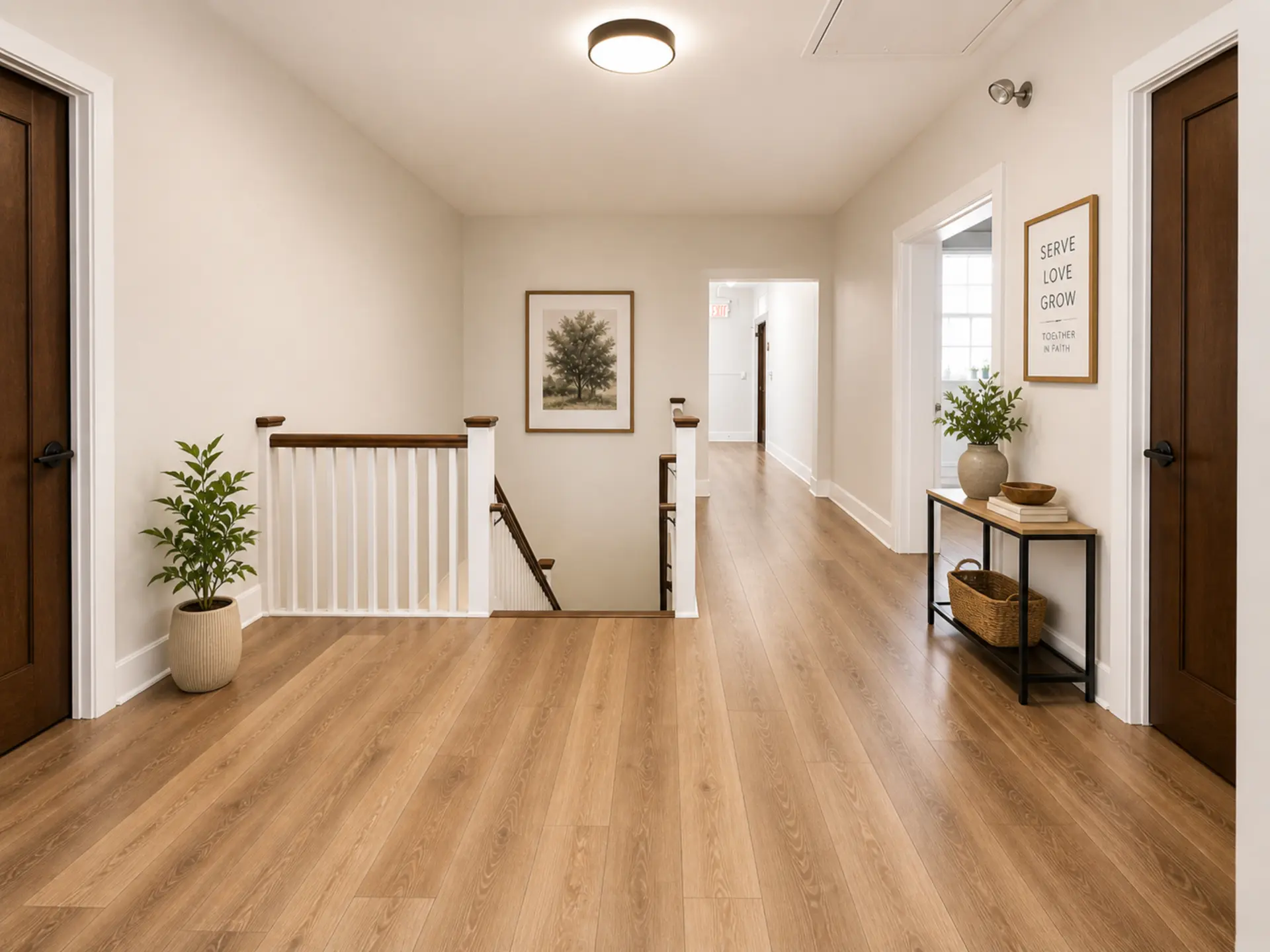
Upper floor hall concept
Shows how the existing circulation could present with coordinated finishes, brighter lighting, and a more polished arrival sequence.
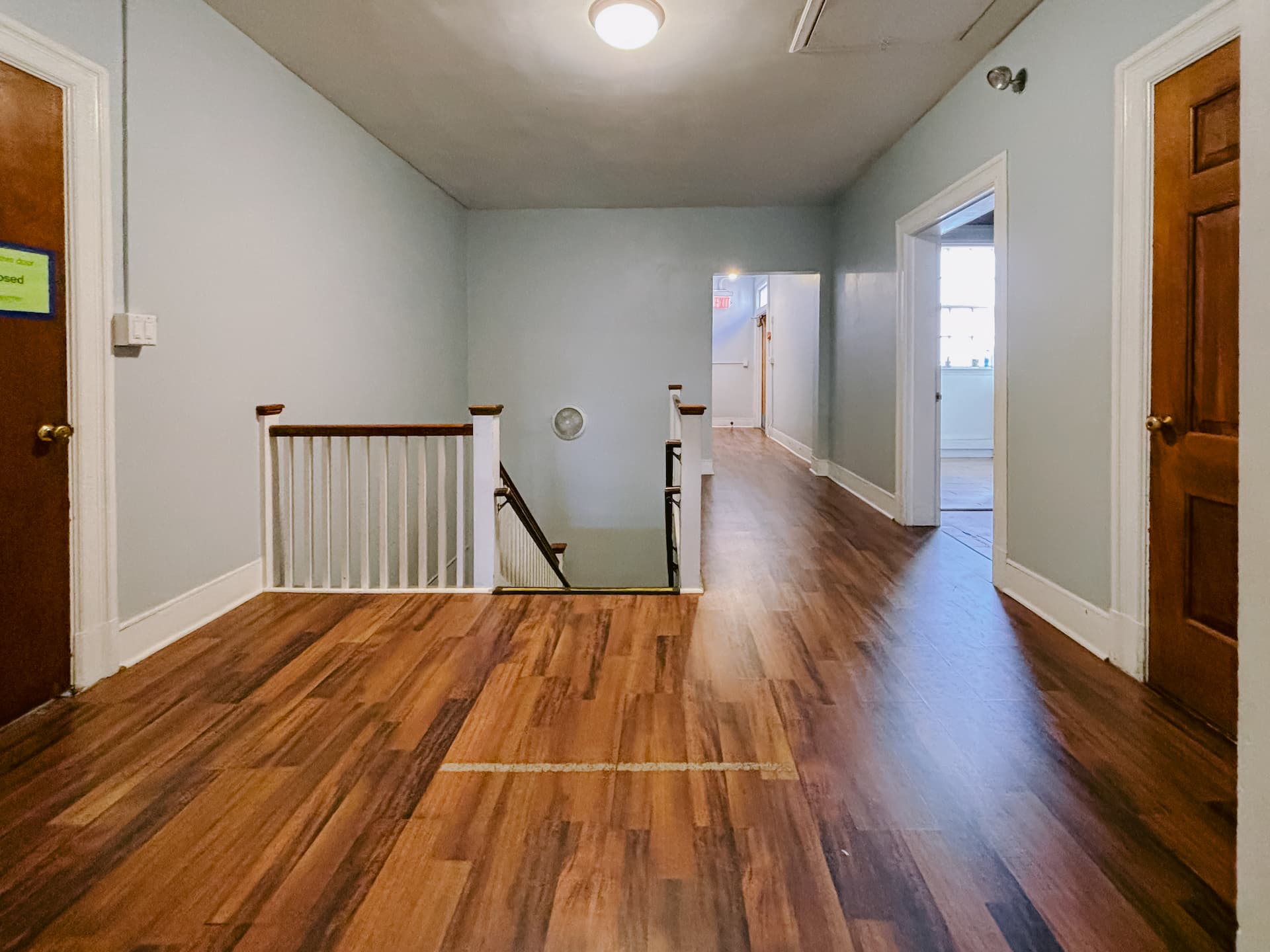
CurrentPotential
Upper floor circulation concept
Shows a cleaner finish strategy for the upper floor hallways and connecting areas.
CurrentPotential
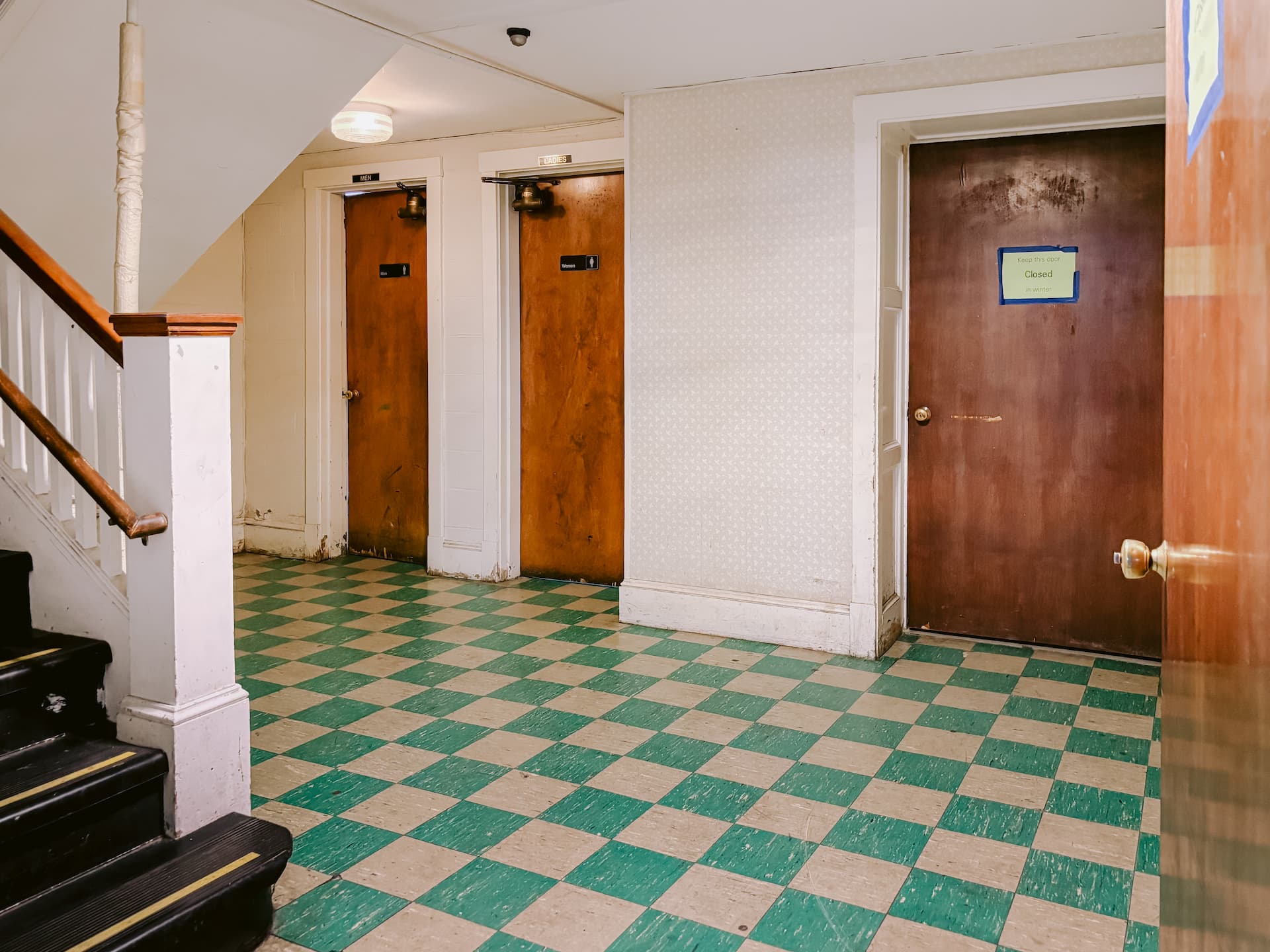
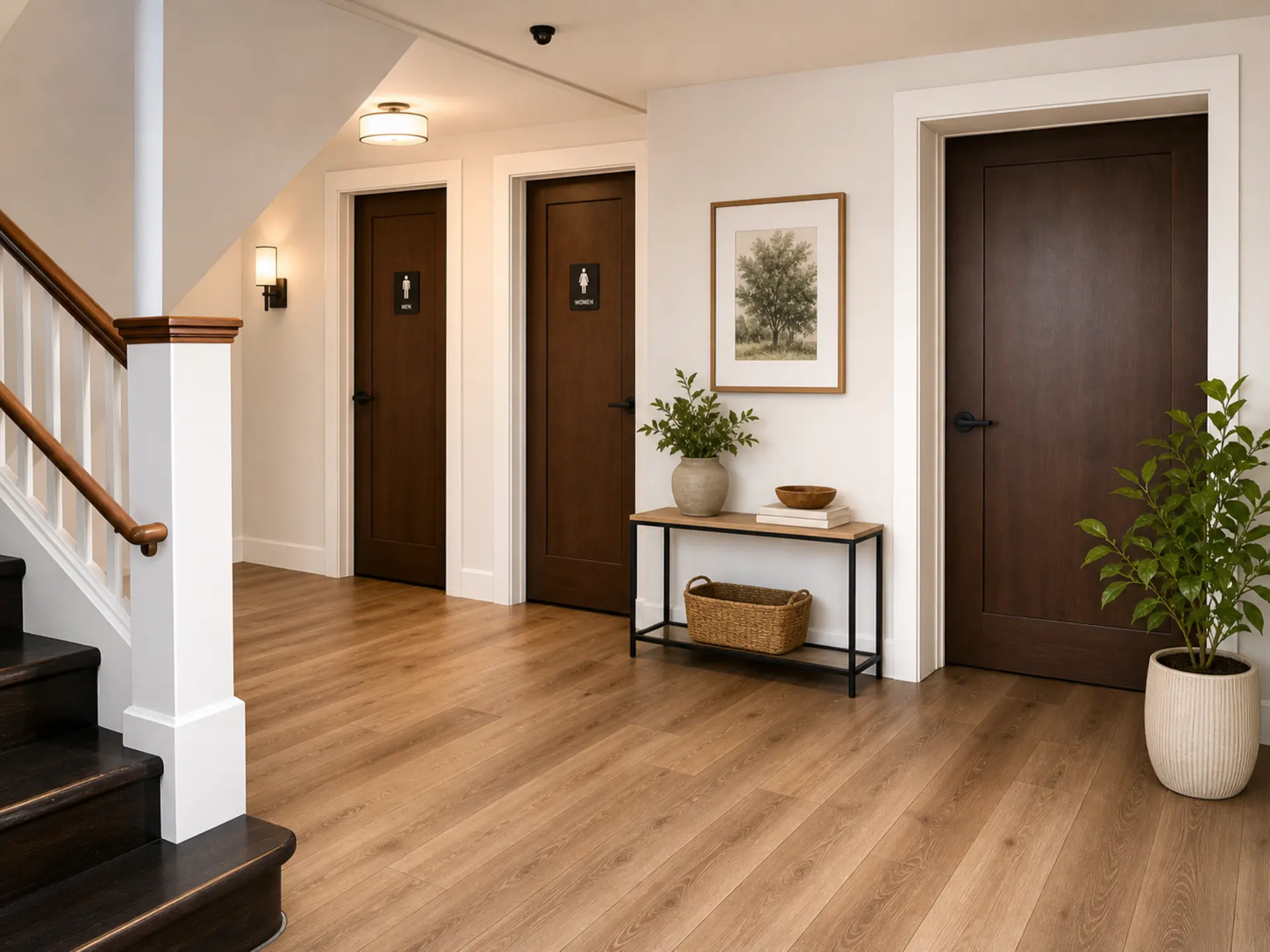
Bathroom corridor concept
Shows a more finished restroom corridor presentation with updated doors, lighting, flooring, and wayfinding.
CurrentPotential
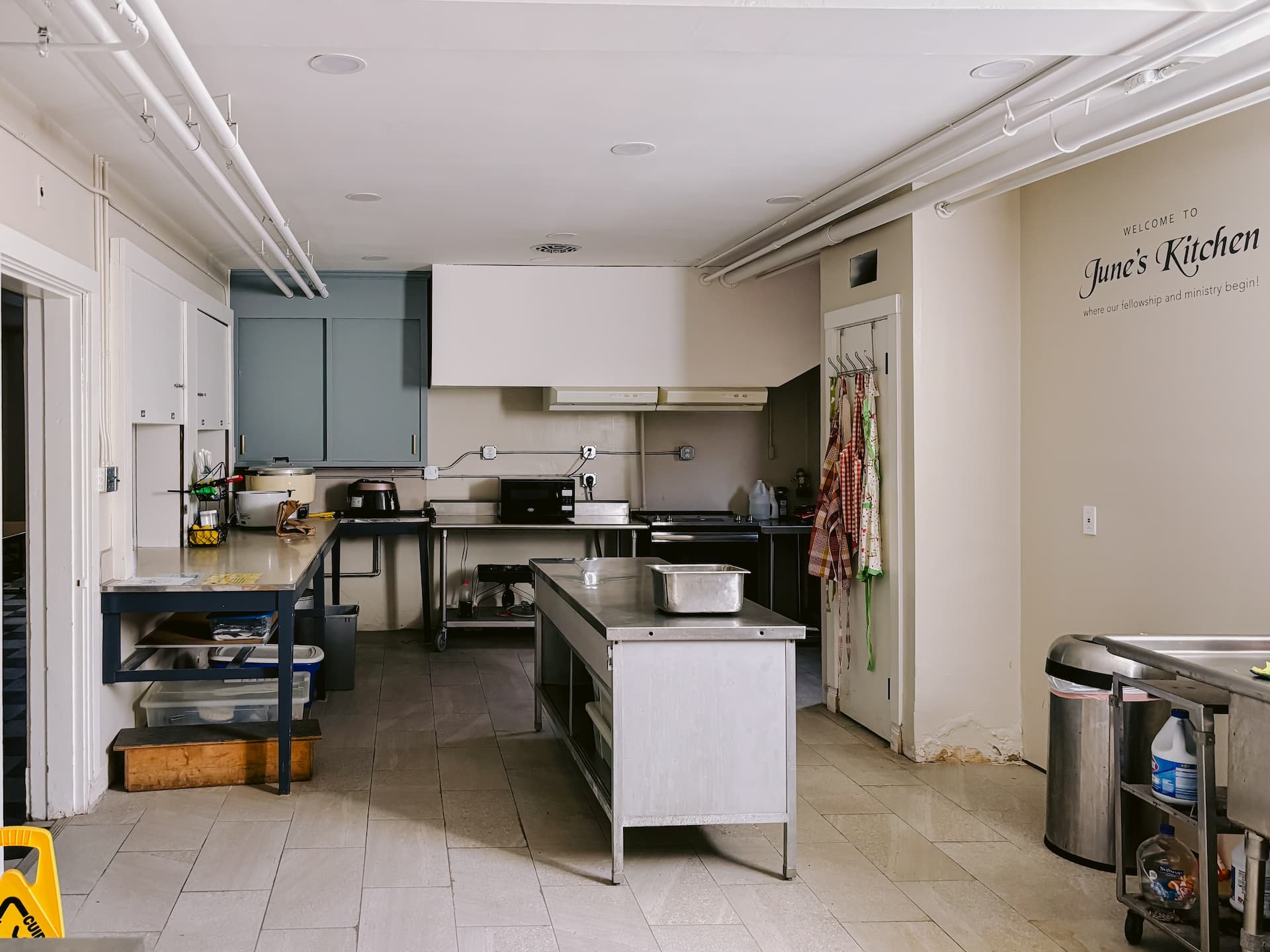
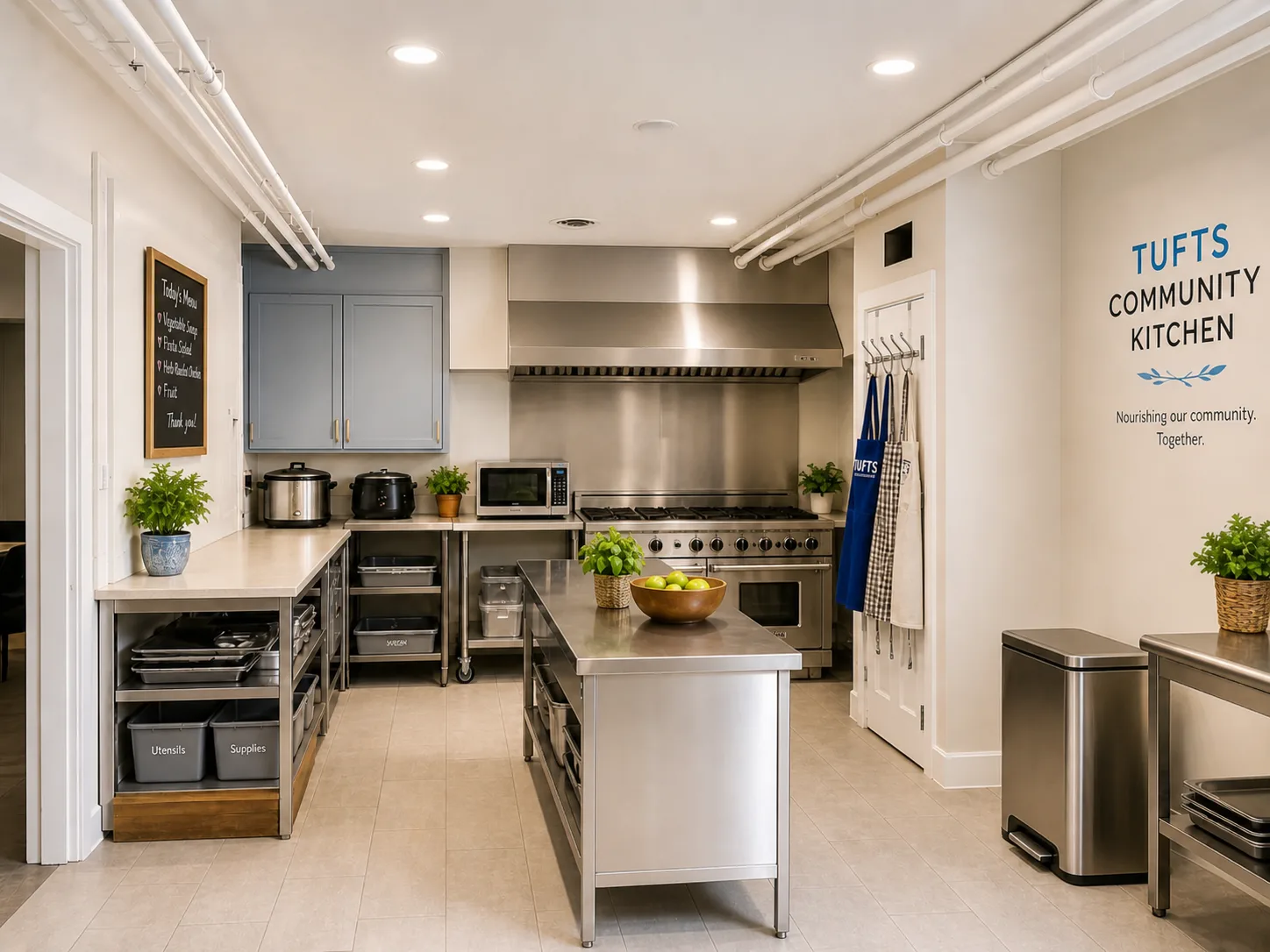
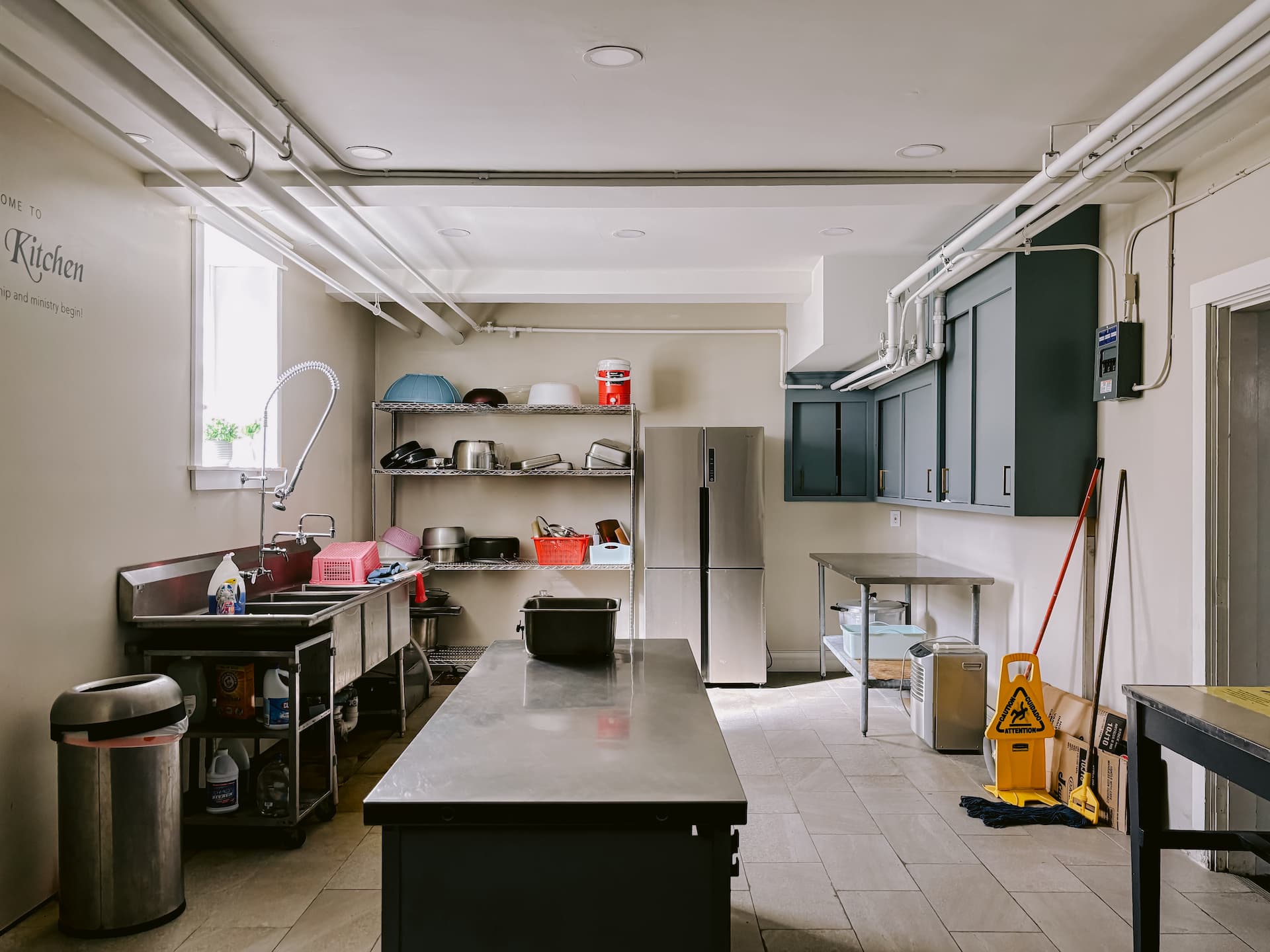
Community kitchen service concept
Shows how the existing kitchen infrastructure could support food access, service-learning, and recurring community meal programs.
CurrentPotential
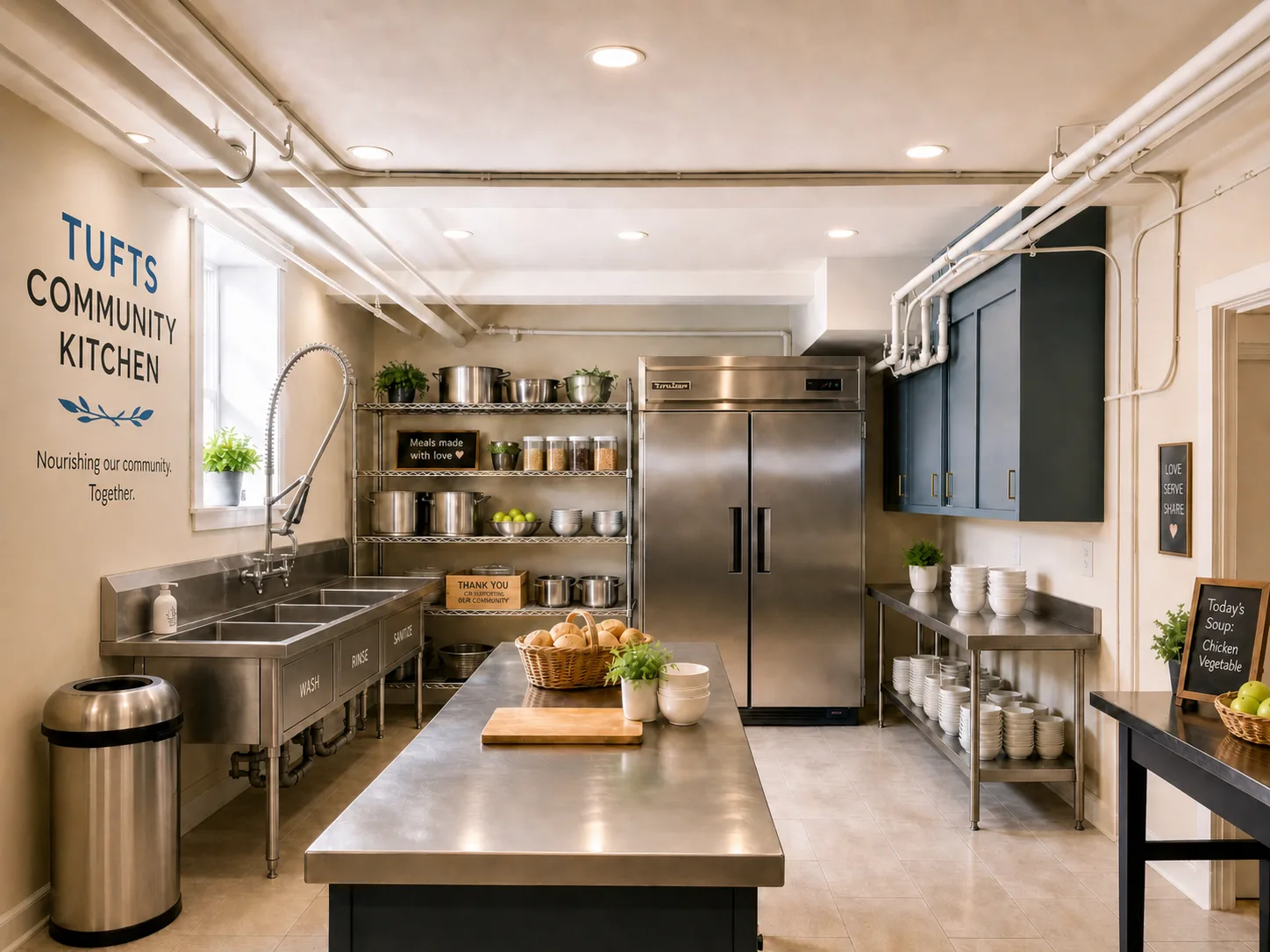
Community kitchen prep concept
Illustrates a refreshed prep layout for organized food-service operations, storage, serving, and volunteer workflow.
CurrentPotential
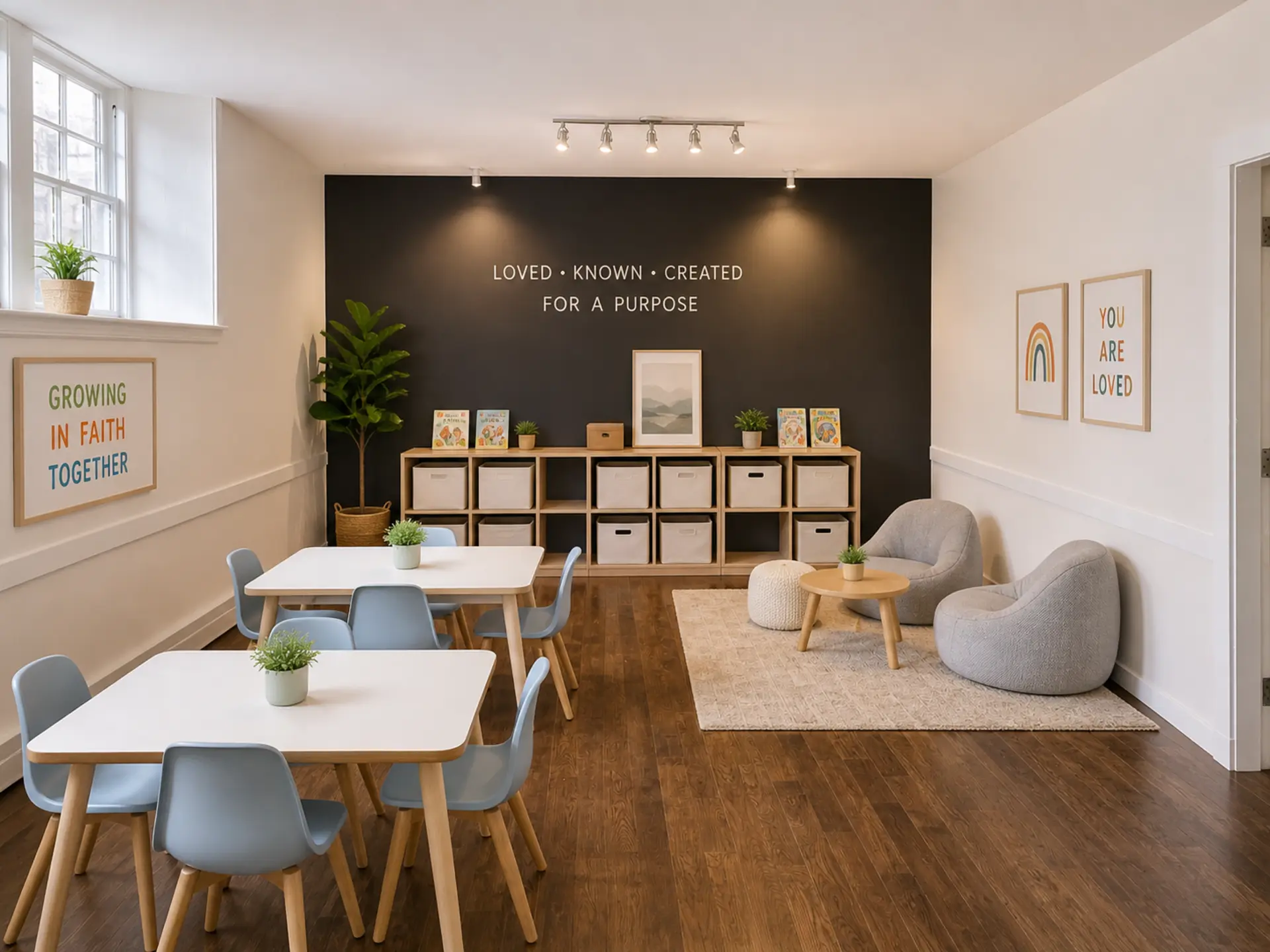
Classroom concept
Shows how one of the existing classroom rooms could be presented for preschool, tutoring, or small-group use.
CurrentPotential
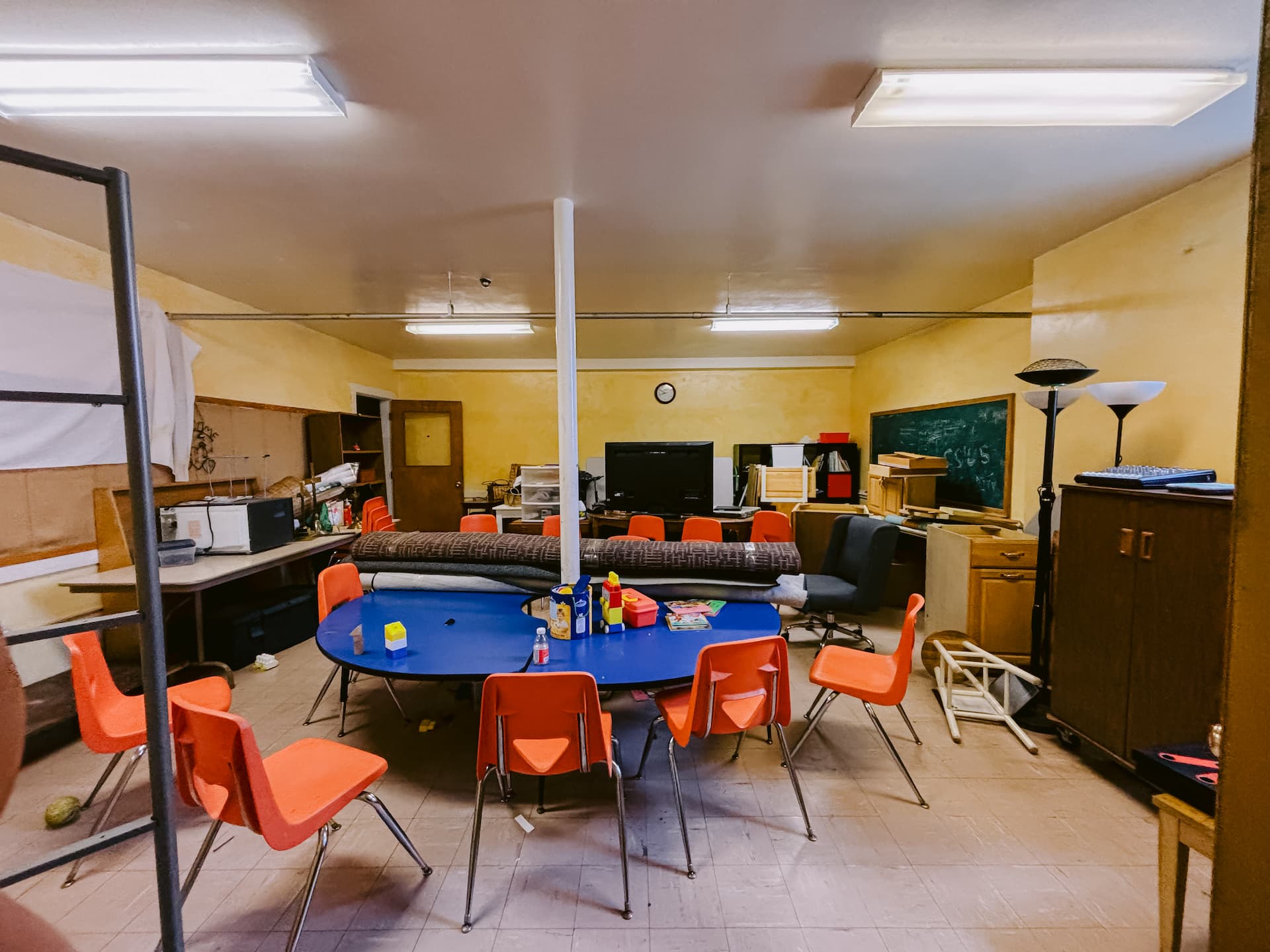
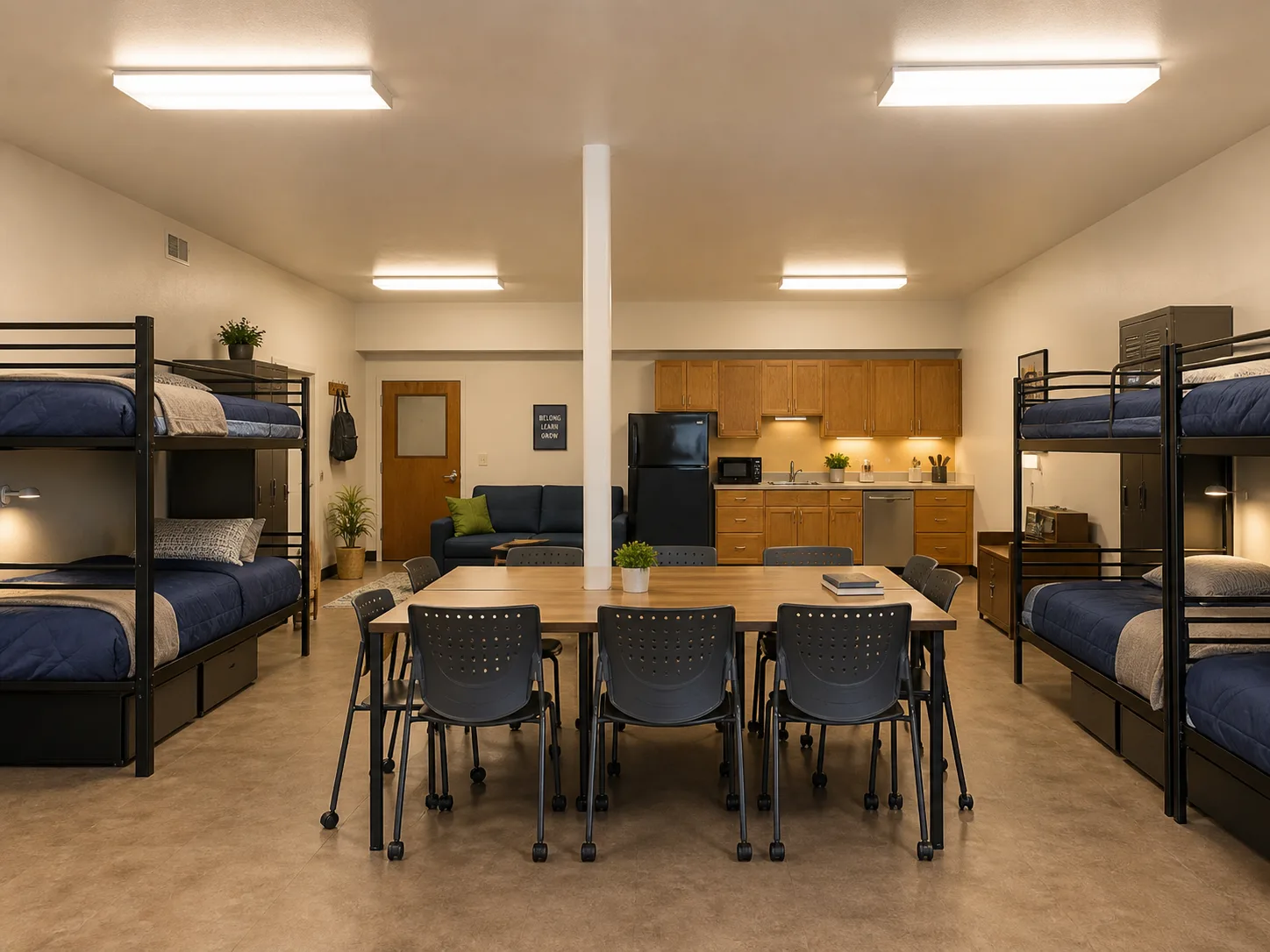
Student housing overflow concept
Shows how the existing classroom-style room could be studied for overnight support, shared table space, and student housing overflow capacity.
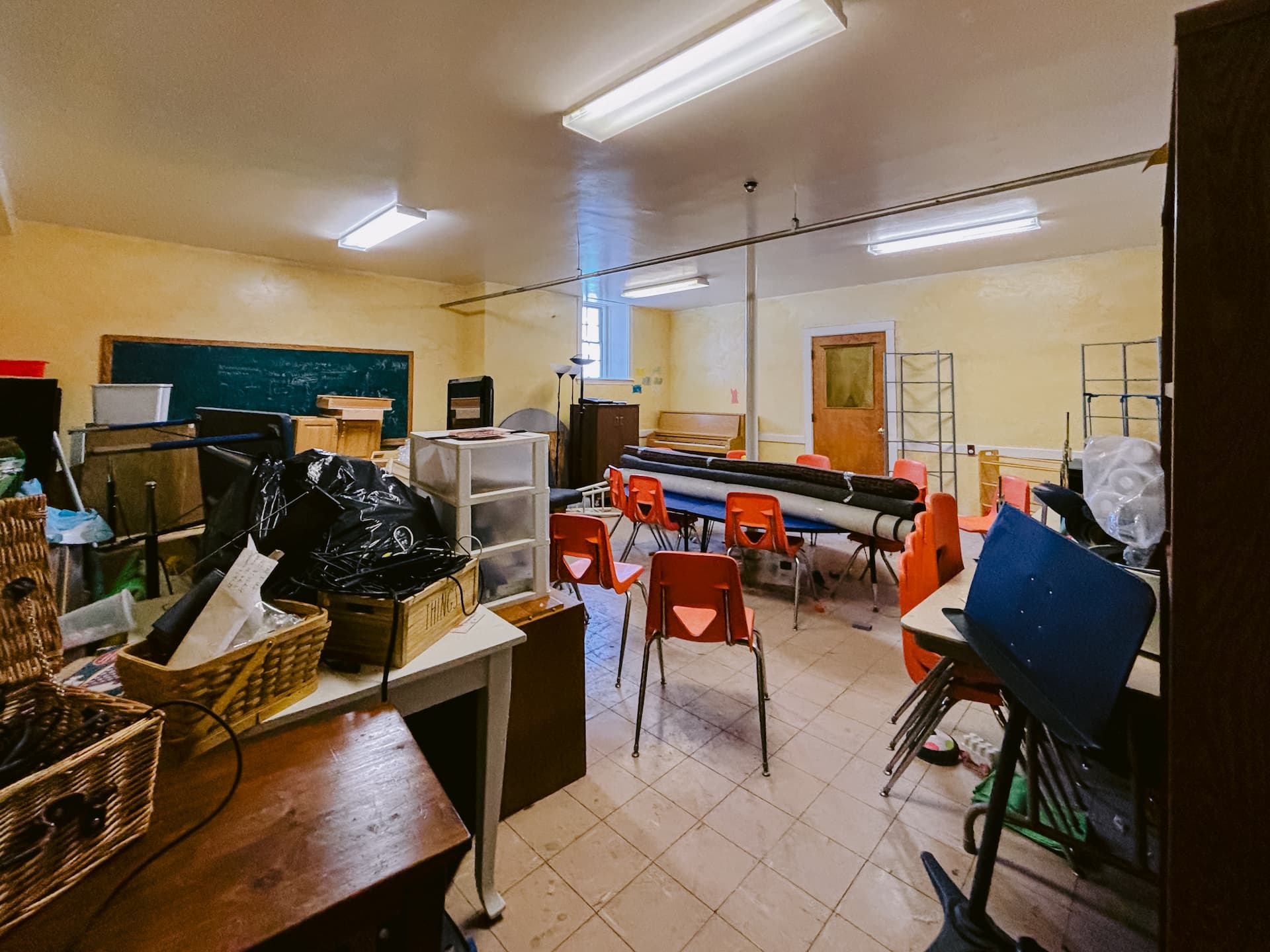
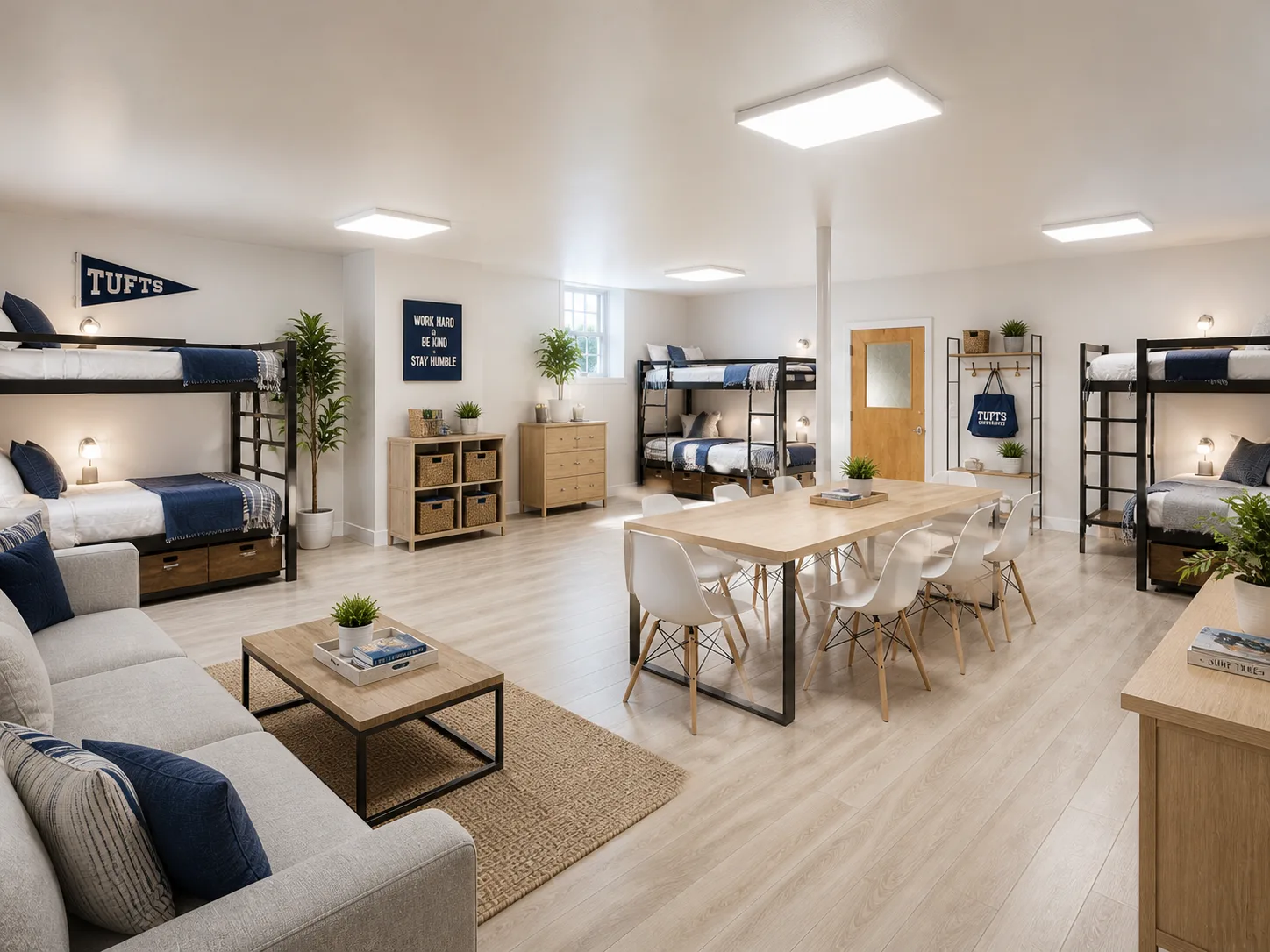
CurrentPotential
Student housing overflow concept
Shows how existing classroom-scale rooms could be studied for supplemental student housing or short-term residential support, subject to code, life-safety, and university approvals.
CurrentPotential
Community hall alternate concept
Shows an alternate program hall furniture plan with dining, lounge, and refreshment zones.
CurrentPotential
Meeting suite concept
Shows a meeting-oriented configuration for leadership meetings, counseling, student support, or program administration.
CurrentPotential
Small-group support room concept
Shows a cleaner room presentation for student support, family services, education, or small-group programming.
Potential images are virtually staged concept visuals provided only to help reviewers
imagine possible use of the spaces. They may not be accurate in style, layout,
finishes, dimensions, code compliance, cost, feasibility, or permitted condition,
and are not plans, approvals, construction drawings, or representations of
completed or permitted improvements.
Solutions Proposal
Three institutional use cases this asset can support
The strongest Tufts case is not a single reuse. It is the combination of
near-campus capacity, student-life space, and long-range infrastructure optionality
in one controlled Medford Hillside position.
Primary Strategic Uses
1 | CoHo corridor
Upperclassmen Housing Capacity Relief
100 Winthrop can complement Tufts' Winthrop Street housing investment by adding
institutional-scale common space, theme-house support, study rooms, and swing
capacity that individual wood-frame houses cannot provide.
2 | Performing arts
The Performing Arts "Third Space"
Granoff Music Center is a world-class 55,000 sq ft facility, but rehearsal
demand can exceed schedulable capacity. The c. 1950 main assembly hall can be studied as a
satellite music annex for large ensembles, recitals, and student groups.
3 | Carbon neutrality
Parking Lot Utility Node
The 101 Winthrop surface lot can be evaluated as a practical mechanical yard
for 100 Winthrop: vertical closed-loop geothermal wells on the parking parcel,
with a short utility loop under Winthrop Street to serve the building directly.
Construction for Good
Community-Positive Growth
Bringing this asset into Tufts' controlled planning framework can reduce
off-campus housing pressure, improve student support, and keep growth aligned
with the Medford neighborhood rather than pushing demand into private rentals.
Supporting Programs
Study Lounges and Seminar Rooms
The social hall and support rooms can provide the shared academic and social
spaces missing from smaller CoHo houses.
Theme House Headquarters
100 Winthrop can serve as a hub for house programming, resident meetings,
leadership activity, and neighborhood-facing student life.
Recitals, Rehearsals, and Readings
The sanctuary volume and stage relationship are well suited for music, theater,
spoken-word, and interdisciplinary arts overflow.
Student Support Annex
Private rooms can be studied for advising, wellness, food access coordination,
or community partnership staff.
Operations Swing Space
The room mix can support near-campus swing use during renovations, relocations,
or temporary program moves.
Food Access and Service Learning
Kitchen infrastructure can support service-learning, food access, community
outreach, and recurring student volunteer programs.
Use cases are planning concepts only. Tufts should verify each scenario against
zoning, building code, accessibility, licensing, life safety, operations, capital
planning, neighborhood engagement, and institutional approval requirements.
Dover Amendment Advantage
Educational reuse may have a more favorable approval path
Strategic Advantage
MGL c. 40A, Section 3, commonly known as the Dover Amendment, limits local
zoning restrictions on educational uses. A transition from religious assembly
to educational facility use could give Tufts a stronger regulatory posture than
a private developer pursuing conventional residential redevelopment.
Regulatory leverageThe entitlement path is part of the acquisition thesis.
Tufts can evaluate 100 Winthrop as an educational reuse of an existing
institutional building, not merely as a private-market redevelopment parcel.
That distinction may materially change the planning conversation, the density
analysis, and the public-benefit narrative.
Current profileReligious assembly
Parcel sizes0.53 ac combined
Review focusEducational use
Why Tufts is differently positioned
Educational mission: rehearsal, student housing support, seminar, advising, and campus infrastructure uses can be tied directly to Tufts' educational purpose.
Existing institutional form: the building was designed for assembly and community use, reducing the mismatch between structure and proposed use.
Campus adjacency: proximity to existing Tufts housing and transit supports a coherent institutional planning argument.
Community benefit: controlled university use can reduce off-campus housing pressure and support Construction for Good principles.
Items to verify before reliance
Dover Amendment applicability: counsel should confirm how MGL c. 40A, Section 3 applies to each proposed use and site condition.
Change-of-use requirements: housing, rehearsal, food-service, office, and infrastructure uses may trigger different reviews.
Life safety and accessibility: egress, bathrooms, sprinklers, fire alarm, accessibility, and occupancy load should be scoped early.
Municipal and neighborhood process: site operations, events, infrastructure work, and neighborhood impacts should be modeled before public engagement.
Planning position: Dover Amendment protection is not a substitute for
diligence, design, or neighborhood process. It does, however, make Tufts a more
natural strategic buyer than a private developer whose approvals would rely on a
different entitlement path.
Tufts 2050 Fit
Building-level decarbonization starts with adjacent land control
Tufts' Carbon Neutrality Framework and Action Plan point toward net-zero by
2050. At 100 and 101 Winthrop, the immediate infrastructure case is not a
speculative campus-grid connection. It is the ability to pair an existing
institutional building with its own nearby utility parcel.
Thermal strategy
Building-specific geothermal yard
The 0.20 acre 101 Winthrop lot can be studied for vertical closed-loop
geothermal wells serving 100 Winthrop directly, with a short utility loop under
Winthrop Street to the building across the street.
Parking continuity
Infrastructure without losing the lot
Vertical closed-loop boreholes are typically 4-6 inches in diameter and drilled
roughly 150-400 feet deep. Drilling is a temporary disruption; after installation,
the lot can be repaved and parking restored. With phasing, 101 can support a
full geothermal well field and remain functional parking before, during, and
after installation. Tufts is not choosing between infrastructure and parking.
Future study
Hot-water loop optionality
Its Winthrop Street edge-of-campus position could be studied as a future anchor
for a distributed hot-water loop as Tufts transitions off legacy steam. That is
optionality to evaluate, not an assumed direct campus-grid connection.
Operations note: this brief is intended to support a real estate,
campus planning, capital projects, facilities, energy, and legal review conversation.
Additional records, floor plans, concept files, property cards, and tour coordination
can be packaged for institutional review on request.
Pricing & Contact
Strategic acquisition review
Offered at $2,950,000. For Tufts real estate, operations, campus planning,
facilities, or outside advisors evaluating the Winthrop Street Anchor, contact
the listing agent to coordinate records, tour access, and diligence materials.